


The 'Doomsday Glacier' Explained
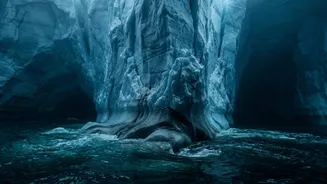
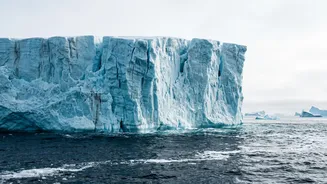
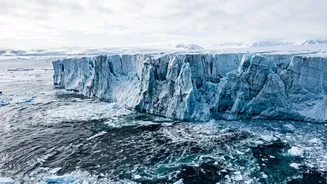
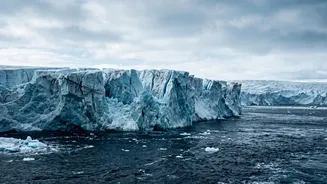
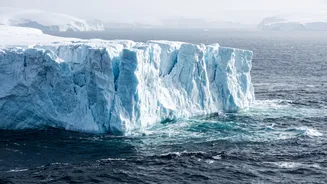
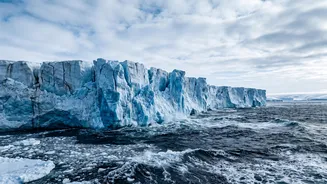
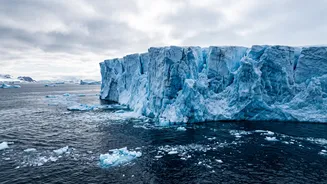
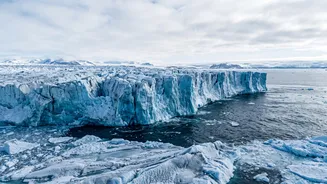
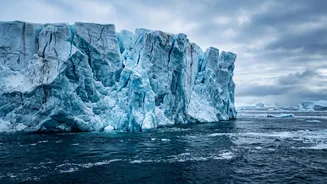
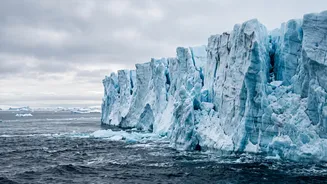
Thwaites Glacier is an immense river of ice in West Antarctica, roughly the size of Florida. It’s a focus of intense scientific study for one critical reason: its potential to dramatically raise global sea levels. The glacier already contributes about
4% of annual sea-level rise. More importantly, it acts like a cork, holding back the vast West Antarctic Ice Sheet. Scientists believe that if Thwaites were to collapse completely, it could raise sea levels by over two feet on its own, and its failure could destabilize the entire ice sheet, leading to an eventual rise of around 10 feet. This would be catastrophic for coastal communities around the world, from Mumbai to Miami.
The Critical Grounding Zone
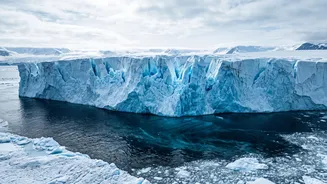
For years, scientists have focused on the 'grounding line'—the point where the glacier lifts off the bedrock and begins to float on the ocean. This boundary is crucial because it controls how much ice flows from the land into the sea. However, new research shows it's not a simple line, but a dynamic 'grounding zone' that can be several kilometres wide. Within this zone, the ice isn't firmly attached to the ground. Instead, it interacts directly with the ocean in complex ways that older models failed to capture fully.
Uncovering Hidden Processes
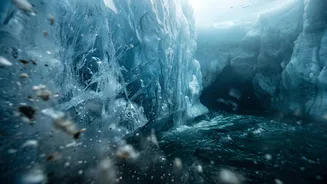
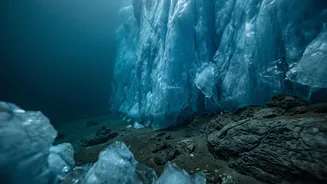
The latest studies have identified a key 'hidden' process called 'tidal pumping'. As ocean tides rise and fall, they lift the floating edge of the ice, allowing relatively warm, salty ocean water to be pumped deep underneath the glacier. This tidal action pushes seawater kilometres inland past the point previously thought to be the stable grounding line. This intrusion of warm water causes vigorous melting from the bottom up, creating channels and cavities that further weaken the glacier's connection to the seabed and accelerate its slide into the ocean.
A More Complex and Worrying Picture
When scientists from the University of California, Irvine, and NASA's Jet Propulsion Laboratory incorporated this tidal pumping mechanism into new ice-sheet models, the results were sobering. Their simulations, published in 'Nature Communications', suggest that Thwaites' contribution to sea-level rise by the year 2100 could be up to 30 millimeters (1.2 inches). This figure is roughly double the amount projected by earlier models that didn't account for these complex grounding zone dynamics. Crucially, this projection is based on current climate conditions, meaning the melt could accelerate further with additional global warming.
Implications for Our Coastlines
While 1.2 inches might not sound like much, it significantly magnifies the risk of coastal flooding and storm surges. The new models also raise alarms about the glacier's stability. Thwaites is currently held back by an underwater ridge that acts as a pinning point. The updated simulations show a roughly 60% chance that the glacier could detach from this ridge by 2100, potentially as early as the late 2030s. Losing this anchor would almost certainly accelerate its retreat, further increasing the risk to coastal populations worldwide.