





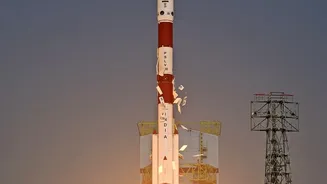


From Drawing Board to Orbit
Founded in 2018 by former ISRO scientists Pawan Kumar Chandana and Naga Bharath Daka, Skyroot Aerospace has rapidly become a symbol of India's burgeoning private space industry. The Hyderabad-based startup made history with its Vikram-S suborbital flight
in 2022 and more recently achieved a monumental milestone with the successful orbital launch of Vikram-1 in July 2026. This achievement, dubbed Mission 'Aagaman' (Sanskrit for 'arrival'), made India only the third country after the US and China to have a private company with orbital launch capability. The company, which is now India's first space-tech unicorn with a valuation over $1.1 billion, develops the Vikram series of rockets designed to provide cost-effective launch solutions for the booming small satellite market.
The Challenge of Cadence
For any rocket company, the first successful launch is just the beginning. The true test of a sustainable space business lies in achieving a regular, reliable, and rapid launch frequency, often called 'cadence'. This is where the headline ambition comes into play. Building a highly complex, precision-engineered rocket is a monumental task; building many of them in quick succession is an entirely different order of magnitude. It requires a seamless, factory-like production line, a robust supply chain, and streamlined integration and testing processes. The goal is to avoid a scenario where a successful launch is followed by a long, quiet period of building the next vehicle. For customers with expensive satellites waiting to fly, predictability is paramount.
Skyroot's Blueprint for Scaling
Skyroot's leadership is acutely aware of this challenge and has already laid out an ambitious roadmap. Co-founder Pawan Kumar Chandana has stated the company's goal is to scale up production to one Vikram-1 rocket per month. To achieve this, the company is expanding its manufacturing footprint, including a major facility in Telangana. The strategy involves moving from one-off builds to a more industrialized process. Chandana has emphasized that gathering data from early flights is foundational to establishing this high-frequency launch cadence. While the initial target is one rocket produced per month, the company notes this won't immediately translate to one launch per month, as they cautiously analyze data from each mission before proceeding to the next. This measured approach is designed to build customer confidence, which is critical in an industry where reliability is everything.
Fuelling India's Space Economy
Skyroot's ambition is not just about its own growth; it's a crucial component of India's larger space strategy. The Indian government has aggressively promoted private participation in the space sector through reforms like the Indian Space Policy 2023 and the establishment of IN-SPACe, a single-window agency to support private players. These reforms have catalyzed explosive growth, with the number of Indian space startups soaring from just one in 2014 to over 450 by 2026. India's space economy, valued at around $8.4 billion, is projected to reach as high as $44 billion by 2033. A reliable, high-cadence private launch provider like Skyroot is essential to realizing this potential, offering domestic and international satellite operators an Indian alternative to foreign launchers and helping India capture a larger share of the global space market.