





The Planet's Fiery Engine
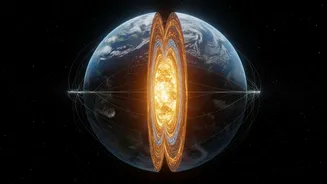
Imagine a sphere the size of the Moon, burning as hot as the surface of the Sun, located more than 2,900 kilometres beneath you. That’s Earth’s core, divided into a solid inner ball of iron and nickel and a turbulent, liquid outer core surrounding it.
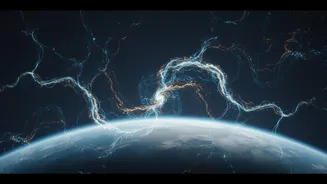
This outer core is not a calm ocean; it’s a superheated, swirling sea of molten metal. This movement of electrically conductive liquid iron is what powers the geodynamo, the process that generates our planet's vital magnetic field. Think of it like a giant, natural dynamo, spinning to create a protective shield that extends far into space, deflecting harmful solar radiation and making life on Earth possible.
An Unexplained U-Turn
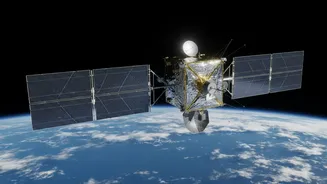
For decades, scientists studying faint changes in the magnetic field concluded that this river of liquid iron was flowing in a predominantly westward direction. But new analysis of satellite data has revealed a dramatic and unexpected change. Around 2010, a huge section of this flow deep beneath the Pacific Ocean abruptly reversed course, switching from a weak westward movement to a strong eastward one. This discovery, made by combining data from the European Space Agency's Swarm satellites with ground-based observations from 1997 to 2025, has left researchers puzzled. Nothing in their previous models suggested such a rapid, regional reversal was possible.
Why Did it Happen?
The short answer is: scientists don't know for sure. The core is inaccessible, so its behaviour can only be inferred through indirect measurements, like studying seismic waves from earthquakes or tracking the magnetic field. One leading hypothesis connects this event to other changes happening even deeper inside the planet. Researchers noted that the reversal happened around the same time that the Earth's solid inner core was observed to be slowing its rotation. It's possible that these two events are linked, hinting at a complex dance between the solid inner core, the liquid outer core, and the mantle above them. However, this connection remains a hypothesis, not a proven cause.
A Temporary Shift or a New Normal?
Adding another layer to the mystery, the latest data suggests the strong eastward flow has already started to weaken since 2020. This raises new questions: was the reversal a short-lived hiccup, part of a repeating natural cycle, or the beginning of a new, long-term pattern for the core's circulation? Scientists stress that continued monitoring is crucial to understanding the future of this flow. This event has overturned previous assumptions that the outer core's flow was relatively stable, showing that dramatic regional changes can happen within just a decade.
Should We Be Worried?
While a 'reversal in the Earth's core' sounds dramatic, there is no cause for alarm. These events occur far too deep to pose any direct threat to people or the climate on the surface. However, they are fundamentally important to understanding how our planet works. The magnetic field is not static; it constantly shifts as the core's flow evolves. These changes can subtly affect navigation systems, satellite operations, and our ability to predict space weather. Ultimately, this unexplained reversal is a powerful reminder of how dynamic and mysterious our planet's interior is, and how much we still have to learn about the hidden engine that protects us all.