









The Problem with 'Use and Discard'
For decades, the standard model for launching satellites has been brutally simple: a powerful multi-stage rocket blasts off, releases its payload into orbit, and its components fall back to Earth or become space debris. The upper stage of the rocket,
the part that does the final orbital insertion, is particularly problematic. After its job is done in a matter of minutes, it's left to tumble aimlessly in orbit for years, adding to the growing cloud of space junk that threatens active satellites and future missions. This 'use and discard' philosophy is not only wasteful but also increasingly unsustainable as the space around our planet gets more crowded.
Enter Agnikul and the Agnibaan Rocket
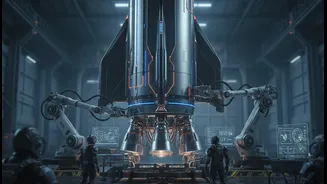
Chennai-based Agnikul Cosmos, a startup incubated at IIT Madras, is one of the leading names in India's private space revolution. Their primary offering is the Agnibaan launch vehicle, a highly customizable rocket designed for small satellites. What truly sets Agnibaan apart is its engine technology. The Agnilet engine is the world's first single-piece, 3D-printed, semi-cryogenic engine, a marvel of modern manufacturing that drastically cuts down production time and complexity. Following a successful suborbital test flight in May 2024, Agnikul is now setting its sights on an even bigger goal with its upcoming 'Mission 02': proving that a rocket can have a second act.
Part One: The Primary Mission
The first part of Agnikul's plan is what you'd expect from any rocket: deliver the payload. The Agnibaan rocket, in its two-stage configuration, will launch and carry a customer's satellite to its desired orbit. This is the primary mission, the fundamental job for which the launch vehicle is built. However, it's what happens after the satellite is deployed that forms the core of Agnikul's innovative strategy. Instead of becoming another piece of debris, the rocket's upper stage is designed to do something extraordinary.
Part Two: A Second Life as an Orbital Platform
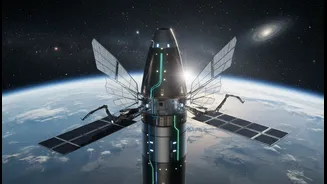
This is where Agnikul reimagines the entire process. After releasing its main payload, the upper stage will remain operational. Instead of being discarded, it will convert itself into a functional, in-orbit platform. This concept, which the company calls a “convertible upper stage,” effectively gives the hardware a second, extended mission. This orbiting platform could then be used to host other, smaller payloads for experiments, test new technologies, or serve as a stable base for in-orbit data processing. Agnikul holds patents for this unique architecture in India, the US, and Europe, signaling the novelty and value of this approach.
Why This 'Dual-Use' Vision Matters
Agnikul's plan is about more than just being clever; it has profound implications for the space industry. Firstly, it tackles the space debris problem head-on by finding a purpose for hardware that would otherwise be junk. Secondly, it creates immense value. A single launch can now serve two functions: deploying a satellite and creating a persistent platform in space for further research or commercial activity. This maximises the return on investment for every launch. In an industry where reusability is quickly becoming a requirement, not a novelty, this dual-purpose strategy offers a unique competitive advantage beyond simply recovering the first-stage booster, which Agnikul also plans to attempt.
The Road Ahead: From Blueprint to Reality
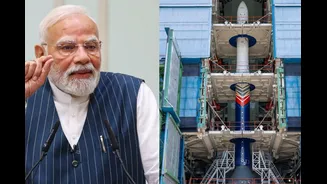
This ambitious vision is currently being prepared for its first major test in the company's upcoming Mission 02. Successfully demonstrating that an upper stage can be converted into a functional platform post-launch will be a monumental achievement for India's private space sector. The mission's success hinges on perfecting complex guidance, control, and power systems to keep the stage alive and useful long after its primary task is complete. The recent appointment of former ISRO chief S Somanath to Agnikul's board underscores the technical significance of this mission, lending deep expertise to this pioneering effort.