









The End of an Era for Job Security
For generations, the path to a secure career was straightforward: get a good job, stay with the company, and climb the ladder. That promise, however, has been rendered obsolete by rapid technological shifts, economic volatility, and evolving business
models. Relying on one employer for your entire livelihood is now riskier than ever. The concept of 'job security'—loyalty to a single position—is being replaced by 'career security', which is the personal ability to remain employable and financially stable, regardless of what happens at one company or even in one industry. This new paradigm places control back into the hands of the individual.
The Rise of the Portfolio Career
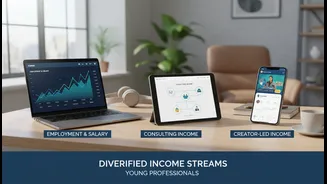
Welcome to the age of the 'portfolio career'. This involves monetising your skills in various ways to create multiple income streams, rather than depending on a single salary. This isn't just for top executives anymore; it's a strategy being adopted by professionals at all levels, particularly by India's Gen Z. A portfolio career can include a mix of part-time work, freelance consulting, side hustles based on a passion, or creating digital products. For many, this approach isn't just about money; it provides a level of freedom, professional development, and personal fulfilment that a single role often cannot. It offers a financial buffer against unexpected job loss or economic downturns, providing peace of mind.
Adaptability: The New Core Competency
The other half of the modern security equation is adaptability. In a world where AI and automation are reshaping industries, the ability to learn, unlearn, and relearn is paramount. Adaptability is the skill of coping with and embracing change, seeing it not as a threat but as an opportunity. Research shows a vast majority of workers believe job security is now entirely dependent on their ability to continuously evolve. This means proactively building a hybrid skill set that combines technical know-how, such as AI literacy, with uniquely human strengths like critical thinking, communication, and emotional intelligence. The goal is to stay relevant and valuable in a constantly shifting job market.
Building Your Diversified Career
Starting this journey doesn't require quitting your day job. The key is to begin small. Start by assessing your existing skills and interests to see what could be monetised. Could your professional expertise be offered on a freelance or consulting basis? Do you have a hobby, like writing or graphic design, that could become a side business? Online platforms have made it easier than ever to find gig work or sell products. The initial goal isn't to replace your primary income overnight, but to create a secondary stream that reduces your dependency on a single paycheck. This small-scale experiment allows you to test the market for your skills with low risk.
Managing Your New Reality
Embracing a portfolio career requires a mindset shift; you become the CEO of your own career. This comes with new responsibilities, such as time management to avoid burnout and the need to handle your own finances and taxes for side income. It also means continuously strengthening your professional network and building a personal brand that showcases your diverse skills. It’s a move from being a passive employee to an active architect of your professional life, where you are responsible for creating your own stability through a carefully constructed and diversified career portfolio.