






Jammu & Kashmir: All-Weather Lifeline to the Valley
For decades, the Kashmir Valley has been at the mercy of treacherous weather and unreliable road access. The completion of the Udhampur-Srinagar-Baramulla Rail Link (USBRL) changes everything. This 272-km engineering marvel, which includes the world's
highest railway bridge over the Chenab River, provides a dependable, all-weather connection to the rest of India. The project is set to be a game-changer for the region's economy. It will allow for the swift and cost-effective transport of horticultural produce like apples and cherries to markets across the country, boosting farmer incomes. Furthermore, enhanced connectivity is expected to fuel a significant rise in tourism, creating jobs and new business opportunities. For residents, it means easier access to essential goods and services, especially during harsh winters, and for the nation, it represents a crucial step in integrating the region's economy and strengthening its strategic position.
Gujarat: Hub of High-Speed and High-Volume Transport
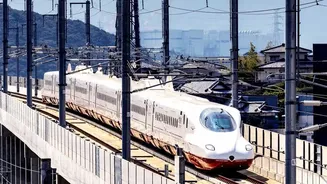
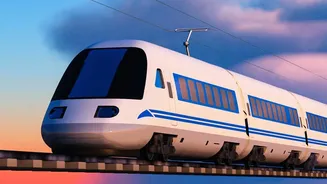
Gujarat is at the epicentre of two transformative railway projects. Firstly, it is a primary beneficiary of the newly completed Western Dedicated Freight Corridor (WDFC), a 1,506-km high-capacity freight line connecting it to the national capital region. This separates freight from passenger traffic, enabling faster, heavier, and double-stack container trains. This is a massive boost for the state's numerous ports like Mundra, Kandla, and Pipavav, and its industrial belts, which deal in petrochemicals, textiles, and automobiles. Secondly, the state is a key part of India's first high-speed rail corridor, the Mumbai-Ahmedabad 'bullet train' project. With a significant portion of the line running through Gujarat, the project is already driving development. Once operational, it will slash travel time between the two financial hubs to around two hours, fostering greater business integration and creating a powerful economic corridor.
Maharashtra: Decongesting and Accelerating a Metropolis
As the other anchor of the Western DFC and the Mumbai-Ahmedabad high-speed corridor, Maharashtra is set for a logistical revolution. The WDFC's terminus at Jawaharlal Nehru Port (JNPT) near Mumbai will significantly enhance the port's efficiency, reducing turnaround times for cargo and lowering logistics costs for businesses across the state's industrial heartland. By diverting freight traffic to the DFC, existing lines will be decongested, paving the way for more reliable and frequent local and inter-state passenger services, a major relief for commuters in the Mumbai Metropolitan Region. The bullet train terminal at Bandra Kurla Complex (BKC) will not only create a new standard in passenger travel but also spur commercial and real estate development in the area, integrating seamlessly with Mumbai's expanding metro network.
The Northeast: Opening a Gateway to Growth
Historically plagued by geographical isolation, India's Northeast is finally being integrated into the national railway network at an unprecedented pace. States like Mizoram and Manipur are witnessing the completion of critical new lines that are nothing short of transformative. The recently inaugurated Bairabi-Sairang line now connects Mizoram's capital, Aizawl, to the country's rail network, drastically cutting transport costs for essential goods and providing local producers of bamboo and horticulture access to new markets. Similar projects are underway to connect the capitals of Nagaland and Manipur. This railway expansion is a cornerstone of the 'Act East' policy, aiming to position the region as a strategic gateway for trade with Southeast Asian nations, boosting both local economies and national security.
Uttar Pradesh: Powering the Industrial Heartland
As a state that sits at the junction of both the Western and Eastern Dedicated Freight Corridors, Uttar Pradesh is uniquely positioned to benefit from the new freight revolution. The EDFC facilitates the rapid movement of raw materials like coal and finished goods like steel, while the WDFC connects its manufacturing hubs to the western ports. This dual-corridor access creates a powerful logistics backbone that can attract significant investment in manufacturing, warehousing, and food processing industries. It promises to reduce transit times, lower business costs, and make the state's exports more competitive. By freeing up capacity on existing tracks, the DFCs will also allow for the introduction of more passenger trains, improving mobility for millions of people across India's most populous state.