





The Science of a Fluffy Grain
The secret to basmati’s delicate, non-sticky texture lies in its starch composition. All rice contains two types of starch: amylose and amylopectin. Amylopectin is a branched molecule that makes rice sticky and glutinous when cooked. Basmati, on the other
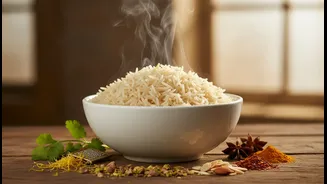
hand, is high in amylose, a long, straight starch molecule that doesn't gelatinize in the same way. This high amylose content is precisely why the grains cook up dry, separate, and fluffy, rather than clumping together. This structure allows each individual grain to stand on its own, creating the perfect canvas for spices and sauces to coat without creating a mushy mess.
An Unmistakable Aroma
That signature nutty, almost popcorn-like fragrance that fills the kitchen is another of basmati’s defining features. This aroma is primarily due to a chemical compound called 2-acetyl-1-pyrroline. Basmati rice naturally contains levels of this compound that are about 12 times higher than in non-aromatic rice varieties. This scent is so distinctive because it's developed under specific growing conditions, primarily in the foothills of the Himalayas, and is further enhanced through a careful aging process. Quality aged basmati has lower moisture content, which not only concentrates the flavour but also helps the grains stay light and fluffy during cooking.
The Foundation: To Rinse and Soak
To truly honour the grain, a little prep work is essential. Rinsing basmati under cold water until the water runs clear is a non-negotiable step. This removes the loose surface starch that can cause stickiness, no matter how well you cook it. Soaking is the next crucial step. Letting the rice sit in water for at least 30 minutes before cooking allows the grains to hydrate evenly. This pre-soak softens the grains, helping them elongate to their full potential and cook more evenly without breaking, resulting in that coveted long, elegant appearance.
Cooking with Care for Perfect Texture
Once prepped, the cooking process requires a gentle hand. One of the most common mistakes is stirring the rice while it cooks. Agitation can break the delicate, elongated grains and release more starch, leading to a gluey texture. Whether you use the absorption method (cooking with a measured amount of water in a covered pot) or the open-pan method (boiling in a large volume of water and then draining), the key is to let it cook undisturbed. After the cooking time is complete, letting the rice stand, covered and off the heat, for a few minutes is vital. This allows the grains to firm up and the moisture to distribute evenly, ensuring a perfectly fluffy finish.
A Canvas for Bold Flavours
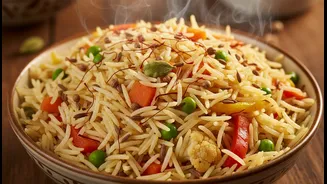
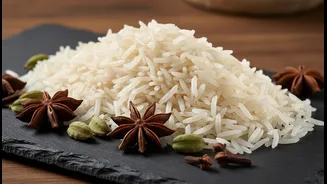
Because its grains remain separate, basmati is the ideal vehicle for the complex spice blends found in Indian cuisine. Whole spices like cinnamon sticks, cloves, star anise, and cardamom pods can be added to the water to infuse the rice with their aroma as it cooks. For a classic jeera rice, cumin seeds are bloomed in ghee or oil before the rice is added. The world's most precious spice, saffron, can be steeped in a little hot water and added to the pot, lending its beautiful colour and earthy, floral notes. The firm but tender texture of each grain ensures it can be generously coated in a rich curry or layered in a biryani without losing its essential character.