






More Than Just a Walk in the Park
Originating in Finland as a summer training method for cross-country skiers, Nordic walking has evolved into a popular fitness activity worldwide. Unlike regular walking, which primarily uses muscles in the lower body, Nordic walking engages up to 90%
of your body's muscles. By using specially designed poles, you actively push yourself forward, turning a simple walk into a full-body workout that targets your arms, shoulders, chest, back, and core muscles in addition to your legs. This increased muscle engagement means you can burn significantly more calories—up to 46% more—than walking without poles, all while feeling like you're not working much harder. The poles also provide added stability, making it an excellent choice for individuals with balance concerns or joint pain, as they help to distribute weight and reduce impact on the knees and hips.
The 'Consistency Over Speed' Philosophy
In the world of fitness, it's easy to believe that faster and harder is always better. However, Nordic walking teaches a different lesson: consistency trumps intensity. The real, lasting benefits of this exercise—such as improved cardiovascular health, increased muscle strength, and better endurance—are built through regular, sustained sessions, not occasional, exhausting sprints. Pushing for speed before mastering the form can lead to improper technique, diminished benefits, and an increased risk of injury or burnout. A consistent routine of moderate-paced walks, perhaps three to five times a week, allows your body to adapt safely, build strength progressively, and turn the activity into a sustainable habit. This steady approach ensures that you continue to show up, which is the most critical factor in achieving long-term fitness goals. Think of it as a marathon, not a sprint; the goal is to keep moving forward steadily, not to burn out after the first kilometre.
Getting the Technique Right
To unlock the full benefits, proper technique is essential. It’s not just about dragging the poles; it’s about using them to propel yourself. Start with good posture: stand tall, look forward, and lean slightly from the ankles. The core movement is based on a natural walking rhythm where the opposite arm and leg move together. As you step forward with your left foot, your right arm swings forward. Plant the pole tip on the ground behind your body at an angle. As you move past the pole, push off firmly, extending your arm behind you. A key part of the technique is to relax and open your hand at the end of the push, relying on the pole's strap to maintain contact. This creates a smooth, flowing motion that engages the upper body muscles effectively. Focus on this rhythm rather than speed. It might feel awkward at first, but with practice, it becomes a natural and powerful movement.
Scaling to Your Current Fitness
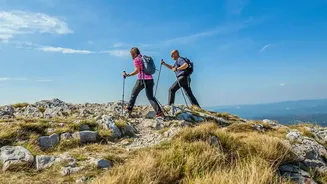
One of the greatest advantages of Nordic walking is its adaptability. Regardless of your current balance or conditioning, you can tailor it to your needs. For beginners or those with balance issues, the poles themselves offer enhanced stability. Start on flat, even surfaces like a park path or a quiet pavement. Focus on coordinating your arm and leg movements at a comfortable, slow pace. Your initial goal should be mastering the form, not covering long distances. As your confidence and conditioning improve, you can begin to increase the duration of your walks. Once you feel comfortable, introduce gentle inclines to increase the intensity and challenge your muscles further. For more advanced walkers, tackling steeper hills, walking on varied terrain like forest trails, or increasing your pace can provide a more vigorous workout. Remember to listen to your body and progress gradually.
Choosing Your Equipment
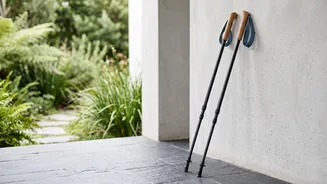
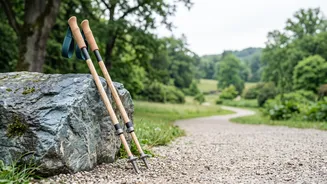
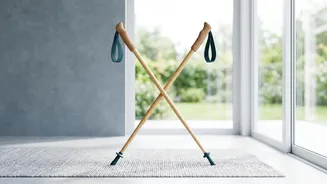
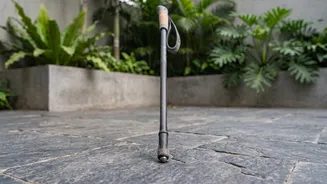
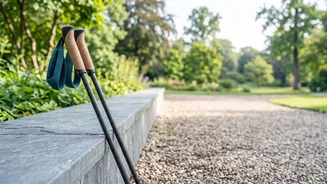
While it may seem like any pair of poles will do, using equipment specifically designed for Nordic walking is crucial. These poles are different from trekking poles used for hiking. Key features to look for include a special glove-like strap system that allows you to perform the push-and-release technique correctly. The poles should also be lightweight and have angled rubber tips, known as 'paws', which provide better grip and shock absorption on hard surfaces like asphalt. When it comes to length, your elbow should be at roughly a 90-degree angle when you stand tall and hold the pole grip with the tip on the ground. Many poles are adjustable, which is a great option if you're new to the activity or if multiple people will be using them. Investing in a good-quality pair will make the experience more enjoyable and effective.