






The Instant Statement Wall
Forget paint swatches and wallpaper paste. A large tapestry, a beautiful quilt, or even a lightweight rug can serve as a dramatic focal point for any room. Hanging a textile on a prominent wall—like behind a sofa or bed—immediately introduces colour,
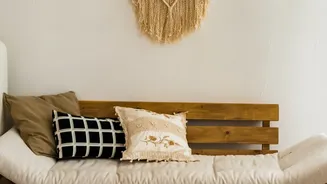
pattern, and a softness that a flat coat of paint cannot replicate. Unlike framed art, which can suffer from glare, fabric wall hangings absorb light, creating a rich, immersive visual experience. They are particularly effective for renters or the indecisive, as they can be installed with minimal damage using adhesive hooks or curtain rods and swapped out whenever the mood strikes.
A Headboard with Character
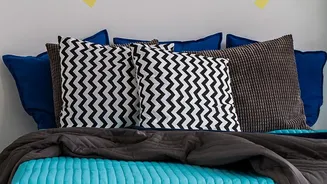
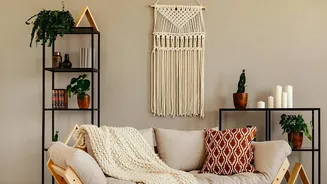
One of the most popular and effective ways to use a large textile is as a headboard. Mounting a rug, a woven macrame piece, or a vibrant kilim on the wall behind your bed creates a soft, textured backdrop that elevates the entire bedroom. It’s a design trick that adds grandeur and makes a space feel more considered and cosy. This approach not only defines the sleeping area but also adds an element of warmth, making the room more inviting. You can easily attach a textile using a simple dowel or curtain rod, creating a high-impact look with low effort and no permanent fixtures.
The Power of Acoustic Softening
Beyond their visual appeal, large textiles serve a valuable practical purpose: they improve a room's acoustics. Fabric is a natural sound absorber. In rooms with high ceilings or hard surfaces like wood floors and large windows, textiles can significantly reduce echo and ambient noise. Hanging a large rug or a thick tapestry can make a living room, dining area, or home office feel calmer and more serene. Conversations become clearer, and the overall auditory experience of the space is enhanced, blending aesthetic beauty with functional comfort.
Adding Texture and Warmth
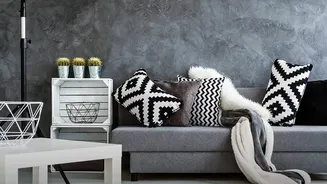
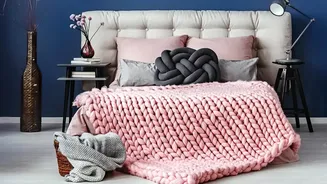
Interior design is as much about feel as it is about looks. Oversized textiles are champions of texture, introducing a tactile quality that invites touch and creates a sense of warmth and comfort. A plush rug on a wall, a nubby throw draped over a sofa, or a soft linen curtain can balance out the harder elements in a room, like wooden furniture or stone countertops. This layering of different materials adds depth and character, making a space feel lived-in and thoughtfully curated. It’s this combination of colour, pattern, and texture that transforms a house into a home.
How to Choose and Hang Your Textile
When selecting a textile, consider its weight and design. Lightweight flatweaves and kilims are often the easiest to hang and feature bold geometric patterns that make a strong statement. For hanging, there are several renter-friendly methods. The simplest is to sew a fabric sleeve or casing onto the back of the textile and thread a curtain rod through it. This distributes the weight evenly and keeps the piece flat against the wall. For lighter pieces, strong adhesive hooks or Velcro strips can work well without leaving a mark. The key is to ensure the textile is secure and hangs in a way that best showcases its beauty.