







A Taste of Home Among the Stars
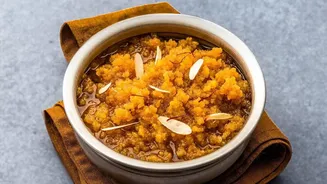
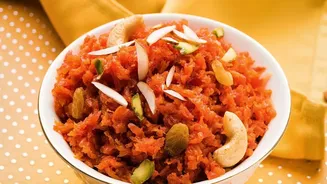
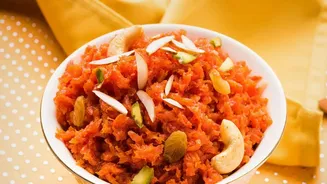
In a delightful fusion of tradition and technology, three iconic Indian sweet dishes—Gajar Ka Halwa, Moong Dal Ka Halwa, and Aamras—have been officially certified for consumption in space. This development is a significant milestone for India's ambitious
space programme, particularly for the upcoming Gaganyaan human spaceflight mission. The Mysuru-based Defence Food Research Laboratory (DFRL), which operates under the Defence Research and Development Organisation (DRDO), has been at the forefront of this culinary challenge. While an extensive menu of Indian favourites, including khichdi and biryani, was initially developed and tested, these three desserts were the first to clear the exhaustive qualification process. This was recently highlighted by Indian astronaut Shubhanshu Shukla, who carried the special food items with him during a mission to the International Space Station (ISS) in 2025.
The Science of Space-Ready Sweets
Transforming a household recipe into a space-safe meal is an immense scientific undertaking. Food intended for astronauts must meet incredibly strict criteria. It needs to have a long shelf life without refrigeration, remain nutritionally stable, and be safe from microbial contamination. The physical challenges of a zero-gravity environment add another layer of complexity. Food cannot produce crumbs, as floating particles could damage sensitive spacecraft equipment. It also must be easy to handle and consume in microgravity. The process often involves technologies like dehydration, thermostabilization (heat processing to kill spoilers), and irradiation to ensure the food is perfectly preserved and safe for the entire duration of a mission. For dishes like halwa, this means perfecting a formula that retains its familiar texture and flavour after rehydration in orbit.
From the Kitchen to the Cosmos
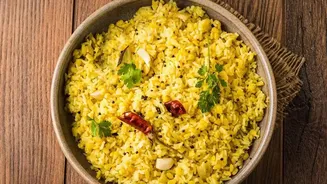
The journey for these sweets began at the DFRL, where scientists worked to adapt the traditional recipes. The goal was to preserve the authentic taste that provides psychological comfort while ensuring the final product met all technical specifications. For instance, Moong Dal Halwa is prepared with lentils, ghee, and milk, then processed to be stable for months. Aamras, or mango pulp, is prepared as a nectar suitable for drinking in space. DFRL has developed an array of other ready-to-eat meals for the Gaganyaan mission, including vegetable pulav, idli sambar, and various rolls. However, according to astronaut Shubhanshu Shukla, limited time for the rigorous testing process was a key reason why only the three desserts were fully certified ahead of his flight.
More Than Just a Meal
For astronauts on long-duration missions, isolated from family and familiar surroundings, food plays a crucial role beyond simple nutrition. Access to familiar, comforting meals can significantly boost morale and mental well-being. The phenomenon of 'fluid shift' in space can dull the sense of taste and smell, making astronauts crave more flavourful, often spicy or salty, foods. After more than a dozen days in orbit, Shukla himself recalled craving salty and spicy snacks from home. Sharing culturally significant food like Gajar Ka Halwa with international crewmates is also a powerful gesture of camaraderie. It offers a unique opportunity to share a piece of Indian heritage in one of the most remote and challenging environments humanity has ever explored.
On the Menu for Gaganyaan
This culinary achievement is directly linked to ISRO's preparations for the Gaganyaan mission, which aims to send Indian astronauts into orbit. The DFRL and other institutions like the ICMR-National Institute of Nutrition are developing a comprehensive diet plan to ensure the crew remains healthy and performs optimally. The menu is being designed to cater to both vegetarian and non-vegetarian preferences, with dishes ranging from dal khichdi to chicken rolls. While Gajar Ka Halwa, Moong Dal Ka Halwa, and Aamras are the first to pass the test, they represent a larger effort to ensure Indian astronauts have a diverse and enjoyable menu. As more dishes complete the qualification process, India's spacefarers will be well-equipped with a comforting taste of home as they embark on their historic journey.