

A Challenge to Old Assumptions
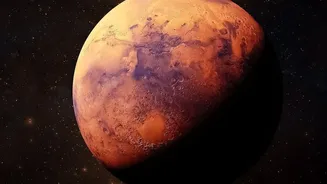
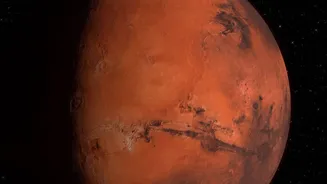
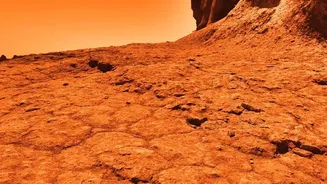
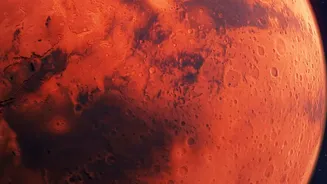
For a long time, scientists have viewed Mars as a 'stagnant lid' planet. Unlike Earth, its surface isn't broken into the shifting tectonic plates that drive geological activity, build continents, and recycle essential elements. This lack of plate tectonics
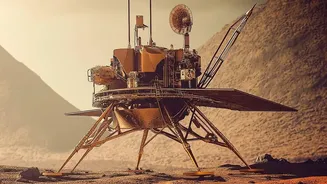
was seen as a major obstacle to long-term habitability. It suggested Mars lacked the complex internal processes needed to circulate water, carbon, and other building blocks of life. However, a groundbreaking study from researchers at the University of Oxford, using data from NASA’s InSight lander, has turned this idea on its head. The data, gathered from 'marsquakes' and meteorite impacts, pointed to a mysterious boundary about 24 kilometres deep in the Martian crust, hinting at a far more dynamic past than previously imagined.
The Clue Hidden Deep Below
The InSight lander's seismometer detected how tremors travelled through the planet, revealing that seismic waves changed speed at this deep boundary. By comparing the data with hundreds of possible rock compositions, the Oxford team deduced what these layers were made of. They found that a denser, iron-rich rock type sits below a lighter, silica-rich layer. This kind of separation, or differentiation, could only happen in enormous, long-lived pools of magma that once churned deep within the Martian crust. This discovery suggests that Mars hosted vast, interconnected magmatic systems stretching for hundreds or thousands of kilometres, a phenomenon known as 'transcrustal magmatism' that was once thought to be unique to Earth.
A New Recipe for a Habitable Planet
On Earth, plate tectonics plays a crucial role in regulating the climate and cycling the elements necessary for life. This new research suggests Mars may have had an alternative method. These vast underground magma systems would have acted like a planet-wide plumbing network, cooking the crust from below. This process could have forced volatile elements like water, carbon, and sulfur, which were trapped in rock, to be released. This geological recycling could have helped sustain an atmosphere and regulate the climate, processes vital for creating surface conditions that could support an ocean. This finding fundamentally alters our understanding of how rocky planets can become habitable, suggesting that active plate tectonics might not be the only way.
What It Means for the Search for Life
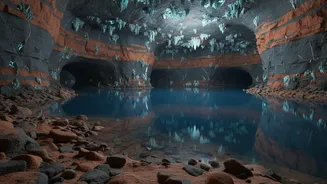
The existence of these ancient magma systems creates exciting new possibilities. The heat and chemical reactions they generated would have created hydrothermal environments—underground pockets of warm, nutrient-rich water. On Earth, similar systems teem with life, independent of sunlight. This finding suggests that Mars could have harboured such life-sustaining niches for long periods. It points to a past where Mars was not just a simple volcanic world, but a geologically complex planet with the ingredients for habitability. It also widens the search for life beyond our solar system, suggesting that smaller, rocky worlds previously dismissed as inactive might deserve a much closer look. According to the researchers, if Mars could develop this level of complexity without plate tectonics, then the conditions needed for life might emerge on more planets than we realised.
Future Missions and Unanswered Questions
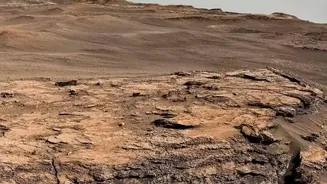
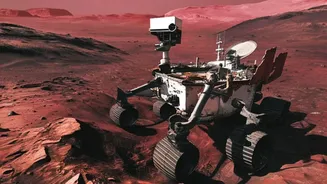
This discovery provides a new framework for interpreting data from Mars. Future robotic missions, and perhaps one day human explorers, will have new kinds of targets to look for. The study suggests that these magmatic processes could have concentrated valuable metal deposits near the surface, which could be a resource for future settlements. While rovers like Perseverance are currently collecting samples that will eventually be returned to Earth, this new understanding of Mars's deep past will help scientists pinpoint the most promising places to search for signs of ancient life. The story of Mars is still being written, and this finding adds a crucial, unexpected chapter, suggesting the Red Planet's secrets run far deeper than we ever knew.