








Answering the Call at IIT Madras
From August 7th to 9th, 2026, IIT Madras is set to host a crucial three-day workshop called “AI in Action: Climate and Energy Systems Applications.” Organized by the AI4NetZero Team at the institute's EnERG Lab, this event is more than just an academic
conference. It's a hands-on initiative designed for students, researchers, and industry professionals to get to grips with how AI, Machine Learning (ML), and Data Science can be applied to solve tangible problems. The goal is to move beyond theory and demonstrate practical applications that can help India navigate its energy transition and build climate resilience. This initiative highlights the pivotal role premier institutions like IIT Madras are playing in developing the next generation of climate problem-solvers.
The 'Real Problems' India Faces
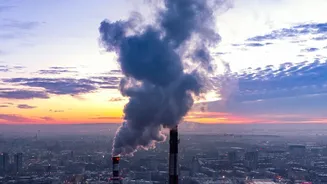
The workshop's focus is directly tied to the significant environmental and energy hurdles confronting the nation. India's energy demand is projected to double by 2030, and the country has set an ambitious net-zero target for 2070. Meeting these goals requires managing a complex and often strained power grid, which still heavily relies on coal. Furthermore, the impacts of climate change are already here, manifesting as increasingly erratic weather patterns, which affect everything from agriculture to urban safety. For instance, accurately predicting the monsoon's arrival is crucial for millions of farmers, while managing peak electricity demand during heatwaves is essential to prevent widespread outages. These are not future scenarios; they are present-day challenges that require smarter, faster, and more efficient solutions.
How AI Provides a Solution
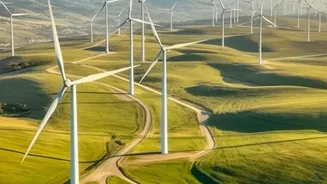
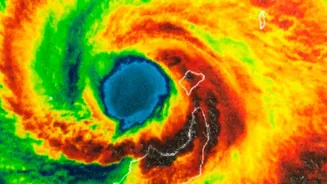
So, how can a string of code help with a flood or a blackout? The answer lies in AI's ability to analyze vast amounts of data and identify patterns that humans simply cannot. The IIT Madras workshop will focus on several key areas where AI can make a difference. One major application is in renewable energy forecasting. AI models can predict fluctuations in solar and wind power generation, allowing grid operators to balance the energy supply and seamlessly integrate more renewables into the national grid. Another is predictive maintenance; for example, AI can analyze data from wind turbines to predict when a part might fail, reducing downtime and improving efficiency. On the climate front, AI is revolutionizing weather prediction, enabling more accurate and hyper-local forecasts that can warn communities about extreme weather events much earlier.
From Code to Communities
The true value of this work lies in its real-world application. The workshop at IIT Madras emphasizes this by giving participants hands-on training with real datasets using tools like Google Colab. This practical approach is crucial for turning research into deployable technology. AI is already being used to give farmers advanced warnings about the monsoon, helping them make better planting decisions. In cities, AI can identify urban heat islands and suggest solutions like cool roofs. It can help manage power grids to reduce transmission losses, which can be as high as 20-30% in some areas, and optimize energy flow to prevent shortages. By training a new cohort of experts, the IITM workshop aims to accelerate the development and deployment of these kinds of impactful solutions across the country.
A Tool, Not a Magic Wand
While the potential of AI is immense, experts are quick to point out that it is not a cure-all. Technology is only as good as the systems and people who use it. Challenges like outdated infrastructure, data quality, and the need for significant investment remain. Moreover, the energy required to power large AI models is itself a major consideration. However, the consensus is clear: AI is a powerful enabler. When combined with human expertise, strong policies, and community engagement, it can be a force multiplier in the fight against climate change. Initiatives like the AI4NetZero workshop are vital because they build the human capacity needed to wield this tool effectively and responsibly.