



Meet NASA's New Cosmic Explorer
The latest addition to NASA's fleet of powerful observatories is the Nancy Grace Roman Space Telescope, which successfully launched on August 30, 2026. Named after NASA's pioneering first chief of astronomy, this flagship mission is designed to investigate
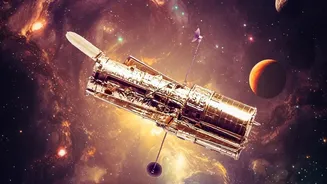
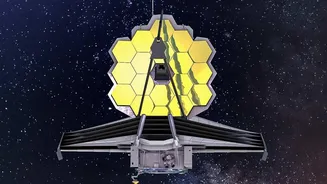
some of the biggest questions in astrophysics, including the nature of dark energy and the search for alien worlds. While the James Webb Space Telescope zooms in on specific targets with incredible detail, Roman is built for breadth. Its primary mirror is the same size as Hubble's, but its Wide Field Instrument gives it a panoramic field of view up to 200 times greater than Hubble's infrared camera. This incredible survey power will allow it to map billions of galaxies and create vast cosmic charts, gathering an unprecedented amount of data to tackle large-scale cosmic puzzles.
The 'Hubble Tension' Explained
At the heart of Roman's mission is a cosmological conundrum known as the 'Hubble Tension'. In simple terms, scientists have two primary ways of measuring the expansion rate of the universe, known as the Hubble constant, and their results don't match. One method involves observing the 'local' universe, looking at relatively nearby objects like Type Ia supernovae—a type of exploding star with a predictable brightness—to measure how fast galaxies are moving away from us. The other method looks at the 'early' universe by studying the cosmic microwave background, the faint light left over from the Big Bang. This provides a prediction for what the expansion rate should be today. The problem is that the value from the local measurements is significantly faster than the value predicted from the early universe. This disagreement suggests there is either a fundamental flaw in our measurement techniques or, more excitingly, a missing piece in our model of the universe itself.
How Roman Will Tackle the Problem
The Nancy Grace Roman Space Telescope is uniquely equipped to address this tension. Its massive field of view allows it to conduct enormous surveys with remarkable speed; one scientist noted that Roman can do in a single year what would take Hubble a thousand years. The telescope will use several methods to create the most precise map of cosmic expansion ever made. Its High-Latitude Time-Domain Survey will detect thousands of Type Ia supernovae, creating a massive, high-fidelity dataset to refine measurements of the expansion rate. It will also map the 3D positions of millions of galaxies to trace how the large-scale structure of the universe has grown over time. Additionally, Roman will pioneer the use of a newer, geometry-based technique involving rare events called gravitationally lensed supernovae to calculate the expansion rate. By employing multiple, independent methods, Roman will help determine if the Hubble Tension is a measurement error or a sign of new physics.
More Than Just Expansion
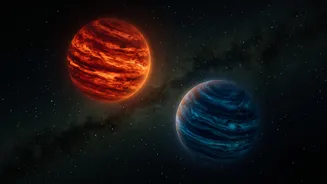
While solving the expansion mystery is a primary objective, Roman's capabilities extend much further. Its wide-angle lens is perfectly suited for hunting exoplanets using a technique called gravitational microlensing. This method can detect planets far from their star, including free-floating 'rogue' planets that don't orbit a star at all. Scientists expect Roman to discover thousands of new exoplanets, providing a statistical census of planetary systems throughout our galaxy. The telescope is also equipped with a Coronagraph Instrument, a technology demonstration designed to block the overwhelming glare of a star to directly image the planets orbiting it. This will provide crucial insights into the atmospheres and characteristics of worlds beyond our solar system. Roman's surveys will also shed light on dark matter, the formation of stars, and the behavior of supermassive black holes.