
An Unplanned Lunar Collision
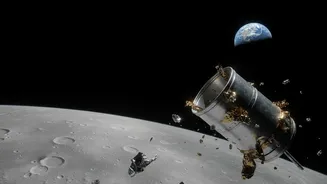
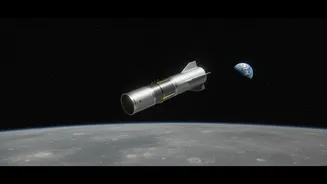
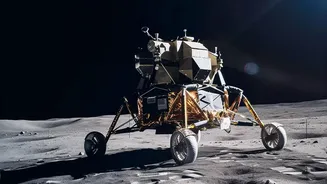
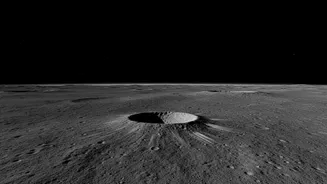
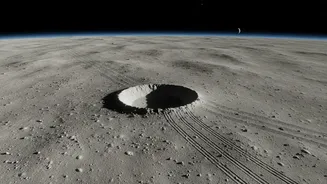
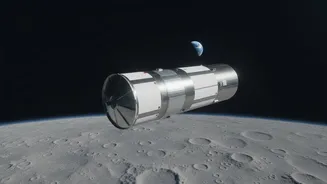
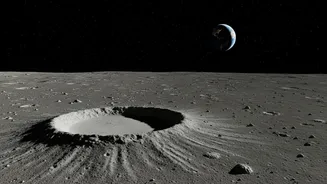
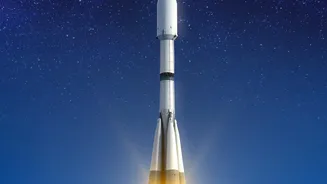
On August 5, 2026, the upper stage of a SpaceX Falcon 9 rocket ended its journey not in a fiery atmospheric reentry, but with a high-speed collision on the Moon's far side. The school-bus-sized object, which had been drifting in a chaotic orbit since
launching a lunar lander in January 2025, struck the surface at a blistering 5,400 mph. The impact, which was predicted by astronomers but not visible from Earth as it happened, wasn't a catastrophe. In fact, scientists are eager to study the new crater and the plume of lunar dust it kicked up for new insights. But the event was more than a scientific curiosity; it was a stark demonstration of a growing blind spot in our space awareness. The rocket stage was tracked, but its final, uncontrolled destination underscores the fact that human-made objects are now littering the path to the Moon.
Welcome to Cislunar Space
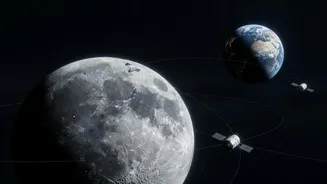
The region where this all happened is called cislunar space. It's the vast expanse between Earth and the Moon, governed by the complex gravitational pull of both bodies. For decades, this area was mostly empty, traversed only by the occasional science probe or Apollo mission. That is changing rapidly. We are entering a new era of lunar activity, with government agencies like NASA and private companies planning dozens of missions, from robotic landers to the Artemis program's goal of a sustained human presence. This region is the new frontier for science, resource extraction, and national security. But as this area becomes a hub of activity, it also becomes a place where things can go wrong.
The Wild West Above Our Heads
We've become very good at tracking objects in low Earth orbit (LEO), the congested space where most satellites live. The Space Surveillance Network tracks tens of thousands of objects to prevent collisions. But cislunar space is a different beast entirely. Its sheer volume is immense, the orbital mechanics are complicated by three-body physics (Earth, Moon, and spacecraft), and our current ground-based sensors are not optimized to see that far with high fidelity. This creates enormous blind spots. Right now, tracking objects in cislunar space is a difficult, often ad-hoc process. There is no comprehensive traffic management system for the Moon-bound, making every new launch add to a mostly unmonitored environment.
Why We Need 'Air Traffic Control' for the Moon
The case for cislunar space monitoring, or Space Domain Awareness (SDA), is simple: safety and sustainability. As nations and companies invest billions in lunar landers, rovers, and future habitats like the Lunar Gateway, leaving their safety to chance is not an option. An accidental collision could mean the loss of a critical asset or, far worse, endanger human lives. Furthermore, a significant collision could create a long-lasting debris field in a stable lunar orbit, threatening all future missions for potentially thousands of years. Establishing robust monitoring would allow for collision warnings, help enforce international norms of behavior, and provide a clear picture of who and what is operating around the Moon. It's about preventing the kind of orbital debris crisis we face in LEO from being repeated in this new, vital arena.
From Stray Rocket to Urgent Catalyst
The SpaceX rocket stage impact is the perfect, low-stakes case study. No one was hurt, and no active mission was destroyed. However, it vividly illustrates the potential for unintended consequences. Astronomers knew it would hit the Moon, but the fact that a large piece of hardware was left on a trajectory to do so highlights a gap in regulation and practice for deep space missions. This incident transforms the abstract argument for cislunar monitoring into a tangible event. It provides the impetus for space agencies and commercial operators to accelerate the development of new tracking technologies—from advanced ground-based telescopes to space-based sensor constellations—and to establish the international agreements needed to manage this shared space safely.