







The Core Philosophy: Land vs. Water
Tai Chi is often described as 'meditation in motion'. It is an internal Chinese martial art practiced for both its defence training and its health benefits. The practice involves a series of slow, focused movements accompanied by deep breathing, designed
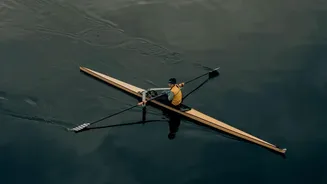
to cultivate 'Qi', or life energy. The entire philosophy is about creating harmony between mind and body through fluid, circular motions. Kayaking, on the other hand, is an activity of exploration and propulsion. It's a water sport where the goal is to move across a body of water using a double-bladed paddle. While it can be meditative, its essence lies in the connection with nature, the rhythmic effort of paddling, and the physical journey from one point to another. The focus is external, on navigating the water and soaking in the environment.
Physical Benefits: A Tale of Two Workouts
Both activities are lauded as low-impact, making them excellent choices for people of various fitness levels and those with joint concerns. Tai Chi is a full-body exercise that significantly enhances balance, flexibility, and lower-body strength. Its slow, controlled postures build lean muscle, improve joint mobility, and are exceptionally effective at preventing falls, particularly in older adults. Kayaking delivers a powerful upper-body and core workout. The act of paddling strengthens the back, shoulders, arms, and abdominal muscles. While the legs are used for stability, the primary physical challenge is in the upper body and core, combined with a significant boost to cardiovascular health and endurance.
The Mental Game: Inner Peace vs. Natural Bliss
Tai Chi’s mental benefits are rooted in its meditative nature. Practitioners focus intensely on their breath and bodily sensations, which helps to reduce stress, lower anxiety, and improve mood. Studies have shown it can lower cortisol levels, promote better sleep, and enhance cognitive functions like memory and focus. The mental reward is a state of profound inner calm and presence. Kayaking provides mental rejuvenation through a connection with nature and rhythmic physical exertion. Being on the water, away from digital distractions, has a proven calming effect. The physical act of paddling releases endorphins, which act as natural mood boosters and stress relievers. The focus required to navigate also promotes a state of mindfulness, offering an escape from daily worries.
Accessibility and Cost in India
Here, the two activities diverge significantly. Tai Chi is highly accessible and affordable. It requires no special equipment and can be practiced in a park, at home, or in a small studio. In India, Tai Chi classes are growing in popularity, with options ranging from group sessions in parks to private tutors. Costs can vary, with online video courses available for as little as ₹1,500, and in-person group classes often costing a few thousand rupees per month. Kayaking has a higher barrier to entry. It requires access to a suitable body of water, such as the backwaters of Kerala, the rivers in Goa, or lakes near cities like Bangalore and Chennai. It also necessitates equipment—a kayak, paddle, and life jacket. For most people in India, this means booking tours or renting from operators. A short kayaking session can cost anywhere from ₹500 to ₹1,500, while longer guided expeditions can be ₹3,500 or more.