








A Landing Among Giants
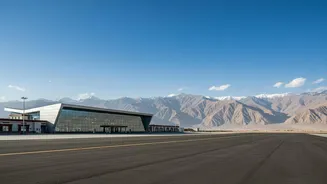
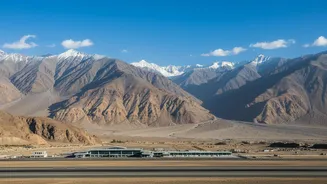
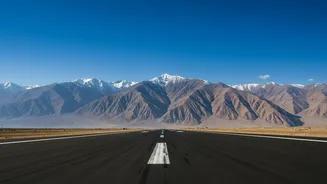
Situated at an altitude of 3,256 metres (10,682 feet), Leh’s airport is one of the highest commercial airfields in the world. The approach is famously scenic and technically demanding, requiring pilots to navigate sharp mountain terrain. Flights are restricted
to the morning hours to avoid the strong afternoon winds that sweep through the valley. For passengers, the experience is unforgettable. The moment you step onto the tarmac, you are surrounded by a panorama of stark, beautiful mountains, instantly immersing you in the Ladakhi landscape. This dramatic arrival is the perfect prelude to the adventures that await in what is often called 'Little Tibet'.
The Hub of Ladakhi Exploration
The airport’s true strength lies in its strategic location just a few kilometres from Leh town. This proximity makes it the logistical starting point for nearly every major tourist circuit in Ladakh. From Leh, a network of roads spirals out to the region's most iconic destinations. A drive north takes you over the famed Khardung La—one of the world's highest motorable passes—into the breathtaking Nubra Valley, with its sand dunes and double-humped camels. To the east lies the mesmerizing Pangong Tso, a high-altitude lake of brilliant blue that stretches across the border. To the west, you can explore the Zanskar Valley, revered for its raw, untouched beauty and opportunities for river rafting.
A Basecamp for Trekkers and Climbers
For those drawn to the mountains for a more intimate experience, Leh serves as an essential basecamp. The town is the staging ground for some of the region's most celebrated treks. The Sham Valley trek, often called the 'baby trek', is a popular choice for beginners, winding through picturesque villages and barley fields. More seasoned trekkers use Leh to acclimatize before embarking on challenging routes like the Markha Valley trek, which offers stunning views and a deep dive into local culture. The airport's accessibility makes it possible for adventurers to fly in, spend a few crucial days adjusting to the altitude, and then set off on foot into the remote wilderness of the Himalayas.
A Lifeline for the Region
Beyond tourism, Kushok Bakula Rimpochee Airport is a critical lifeline. For several months in winter, heavy snowfall cuts off road access to Ladakh, making the airport the only year-round link to the rest of India for both residents and the military. It plays a dual role as a civilian airport and a strategic Indian Air Force base, underscoring its importance in a sensitive border region. This function ensures the transport of essential supplies and personnel, highlighting the airport's role in the security and sustenance of the entire area.
Navigating the High-Altitude Challenge
While the airport provides unparalleled access, its high elevation presents challenges for travellers. Altitude sickness is a real concern, and visitors are strongly advised to rest and acclimatize for at least a full day upon arrival before undertaking any strenuous activity. Drinking plenty of water and avoiding heavy meals can help ease the transition. Operationally, the thin air affects aircraft performance, necessitating a longer runway and special pilot training. These factors, combined with unpredictable weather, make every successful landing and takeoff a testament to modern aviation and engineering prowess in one of the world's most demanding environments.