
A Tangible Step Forward
For years, the bullet train has been a symbol of India's future-forward infrastructure goals. Now, that future has a physical form. According to Railway Minister Ashwini Vaishnaw, the very first coach built for testing is ready. While this is not a passenger
coach ready for commercial service, its completion is a critical development milestone. It allows engineers to begin the extensive testing required for a project of this scale. This phase is crucial for validating the train's performance and safety systems ahead of its phased public launch. The completion of the coach moves the project from blueprints and construction sites to the tangible reality of a high-speed train, marking a significant psychological and technical victory for the National High Speed Rail Corporation Limited (NHSRCL), the body executing the project.
Inside the Shinkansen E5 Series
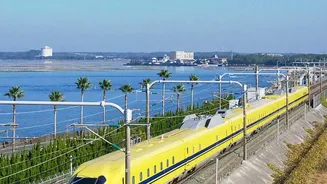
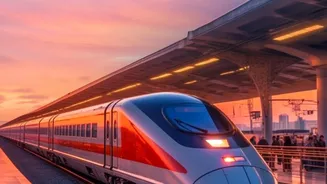
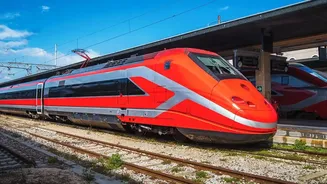
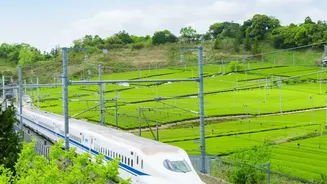
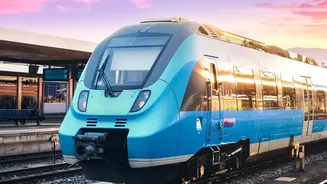
The trains for the corridor are based on Japan’s famous E5 Series Shinkansen technology, adapted for Indian conditions. These trains are engineered for a top operational speed of 320 km/h, which will dramatically slash travel times. Passenger experience is at the heart of the design. The coaches will be more spacious than traditional train cars and will feature amenities such as modern, comfortable seating, climate control, and advanced safety systems including anti-derailment mechanisms. For passenger convenience, there will be dedicated luggage space, and some reports have indicated specialised facilities like baby changing rooms and extra-spacious toilets for wheelchair users will be included. This focus on safety and comfort aims to provide a world-class travel experience, setting a new benchmark for rail travel in India.
The Race to 2027 in Gujarat
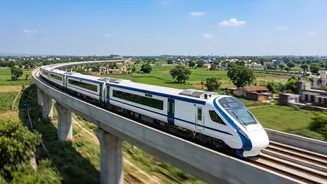
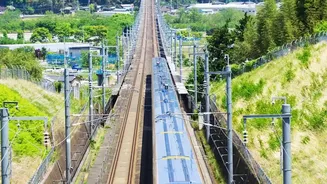
The project is being rolled out in phases, with the initial focus on the Gujarat portion of the corridor. The Surat to Bilimora section, a nearly 50-kilometre stretch, is officially targeted for commissioning in 2027. This section will be the first to open to the public, serving as a real-world showcase of high-speed rail in India. Progress in Gujarat has been swift, with a significant portion of the elevated viaduct already constructed. Officials have noted that civil construction work on the nearby Vapi-Surat section is expected to finish by December 2026, which is another step towards making the initial operational stretch a reality. Opening this first section will allow the railways to begin operations and gather valuable data while construction on more complex parts of the 508-km corridor, especially in Maharashtra, continues.
Overcoming Hurdles on a Landmark Project
Executing India’s first high-speed rail project, which spans 508 kilometres across Gujarat, Maharashtra, and Dadra and Nagar Haveli, is a monumental undertaking. The project has faced its share of challenges since its foundation stone was laid in 2017, including complex land acquisition processes and difficult construction work, such as building an undersea tunnel and navigating eco-sensitive zones. However, recent updates show significant headway. In Maharashtra, construction on a 135-km elevated stretch is making rapid progress, with work on stations and major river bridges well underway. The phased commissioning strategy, starting with the Surat-Bilimora section, is a practical approach to navigate these complexities, allowing parts of the line to become operational as they are completed. Japan has also reaffirmed its technical and financial support for the project, reinforcing the commitment to the 2027 target for the first phase.