


A Scale for Destruction
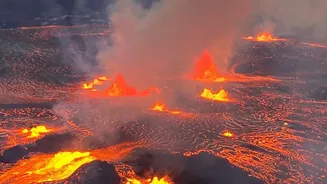
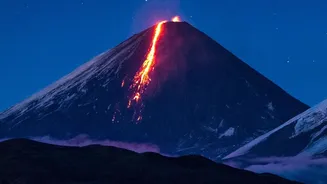
To understand the power of a volcanic eruption, scientists use the Volcanic Explosivity Index, or VEI. Created in 1982, it's a logarithmic scale from 0 to 8 that measures how much volcanic material is ejected and how high it goes. Each whole number increase
represents a tenfold jump in explosive power. A VEI 0 is a gentle, non-explosive flow, while a VEI 8 would be a planet-altering supervolcano. The most powerful eruptions of the 21st century have landed in the VEI 4 to 6 range, which is more than enough to cause widespread disruption and devastation.
Hunga Tonga-Hunga Haʻapai, Tonga (2022)
On January 15, 2022, the submarine volcano Hunga Tonga-Hunga Haʻapai produced the largest atmospheric explosion recorded by modern instruments. It was officially declared the biggest explosive eruption of the 21st century. The blast was hundreds of times more powerful than the atomic bomb dropped on Hiroshima and was heard nearly 10,000 km away in Alaska. It generated an atmospheric pressure wave that circled the globe several times. Rated between VEI-5 and VEI-6, the eruption sent a plume of ash and gas to a record-breaking height of 58 kilometres, generating so much lightning it accounted for nearly 80 percent of all strikes on Earth at its peak. The subsequent tsunami caused devastation in the Kingdom of Tonga and sent waves across the entire Pacific.
Eyjafjallajökull, Iceland (2010)
An eruption with a relatively modest VEI of 4, Iceland's Eyjafjallajökull became globally infamous in April 2010. Not for its raw power, but for its colossal disruption. The volcano's fine-grained ash was propelled into the jet stream, right towards Europe, one of the world's busiest air corridors. Fearing that the abrasive ash particles would damage jet engines, authorities grounded over 100,000 flights, affecting 10 million passengers. The six-day shutdown cost the airline industry an estimated US$1.7 billion and the wider global economy up to US$5 billion. It was a stark reminder of modern society's vulnerability to natural events, as flower exporters in Kenya and countless other businesses felt the economic shockwaves.
Mount Merapi, Indonesia (2010)
In the same year, a far deadlier story unfolded at Mount Merapi in Indonesia. Beginning in late October 2010, a series of violent eruptions produced the volcano's largest event in over a century. Merapi, which translates to 'Mountain of Fire', is known for its dangerous pyroclastic flows—superheated avalanches of gas and volcanic debris. The 2010 eruptions sent these deadly flows cascading down its populated slopes, forcing the evacuation of over 350,000 people. Despite timely warnings that saved thousands of lives, nearly 400 people were killed. The event served as a tragic illustration of the immense human risk posed by volcanoes located near dense population centres.
Puyehue-Cordón Caulle, Chile (2011)
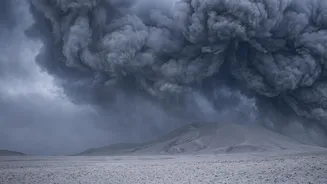
In June 2011, after 51 years of silence, the Puyehue-Cordón Caulle volcanic complex in Chile roared to life with a powerful VEI-5 eruption. The event sent a colossal plume of ash and pumice 10-15 kilometres into the atmosphere. Strong winds carried the ash cloud east across Argentina, covering towns and agricultural land. But it didn't stop there. The plume continued its journey, disrupting flights across the entire Southern Hemisphere as it circled the globe in just under two weeks, affecting cities in Australia, New Zealand, and beyond. The eruption ejected an estimated one hundred million tons of material, demonstrating how a single event can have a truly planetary reach.