



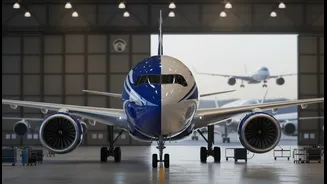




An Order of Historic Proportions
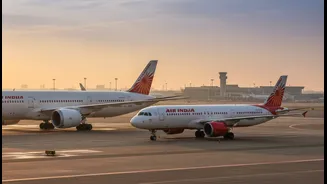
In a landmark move for Indian aviation, Air India, under the ownership of Tata Group, announced a firm order for 470 new aircraft from manufacturers Airbus and Boeing in 2023. This was followed by subsequent additions, bringing the total order book to nearly
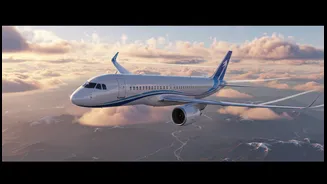
600 jets. The massive deal, valued at an estimated $70 billion based on list prices, includes a mix of next-generation narrow-body planes like the Airbus A320neo family and Boeing 737 MAX, and wide-body aircraft such as the Airbus A350, Boeing 787 Dreamliner, and Boeing 777X. The order is the cornerstone of Air India's Vihaan.AI transformation program, a five-year plan to overhaul the airline, modernize its fleet, and re-establish its reputation as a world-class carrier. The plan was not just about replacing aging planes but about fueling significant domestic and international expansion, positioning Air India to compete with global giants and cater to India's rapidly growing aviation market.
The Reality of a Strained Supply Chain
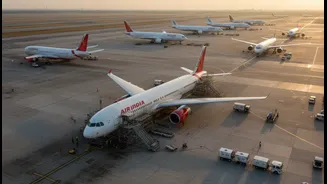
Despite the grand ambitions, the delivery of these new aircraft has been sluggish. As of mid-2026, less than 10% of the total order book had been delivered to the Air India Group. While deliveries of some aircraft like the Airbus A350-900 and Boeing 737 MAX for Air India Express have begun, the overall pace is behind the initial optimistic schedules. An airline executive acknowledged that the deliveries are expected to pick up towards the end of 2026, with a steadier stream of 50 to 60 new aircraft arriving annually in the following years. This delay is not unique to Air India. The entire global aviation industry is grappling with severe supply chain constraints that have hobbled the production capacity of both Airbus and Boeing. These backlogs mean that new production slots for popular aircraft are scarce, with waiting lists extending well into the next decade.
Engines and Interiors: The Core Bottlenecks
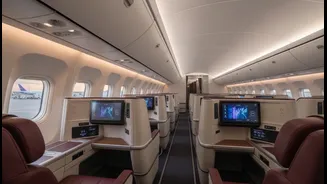
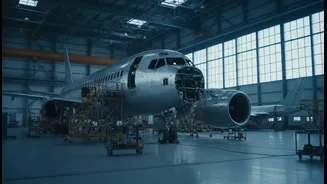
The primary cause of the slowdown lies with the complex, global network of suppliers that Airbus and Boeing depend on. One of the most significant pinch points is the production of jet engines. CFM International, a joint venture that produces the LEAP engines for the best-selling Boeing 737 MAX and a large portion of the Airbus A320neo family, has been racing to ramp up production. Issues with the durability of some engine components in hot and dusty environments, typical of regions like India and the Middle East, have also required design updates, further impacting the supply chain. Beyond engines, manufacturers are facing shortages of everything from cabin interior components and seats, especially for premium classes, to raw materials and skilled labor. These disruptions have a cascading effect, delaying not only the production of brand-new aircraft but also Air India’s parallel $400 million program to retrofit its existing fleet of Boeing 777 and 787 jets with new interiors.
What This Means for Passengers
For travelers, the slower-than-expected fleet renewal has tangible consequences. The promise of flying on brand-new aircraft with modern amenities, better fuel efficiency, and new premium economy cabins across the network will take longer to realize. The airline's ability to launch new international routes and increase frequencies on existing ones is directly tied to the arrival of new wide-body jets. In the interim, passengers on many routes will continue to fly on older aircraft, some of which are still awaiting their planned cabin refurbishment. While Air India is progressively deploying its new A350s on key international routes to cities like London and New York, the widespread upgrade of the long-haul passenger experience is now a more gradual process. The airline has stated that retrofitting its Dreamliner fleet should be completed by mid-2027, with the Boeing 777s taking a bit longer.