






A Cosmic Ghost Called 'The Sausage'
The story begins with a rather unusual name: the Gaia Sausage. This isn't a celestial snack, but the nickname for a dwarf galaxy that our Milky Way devoured between 8 and 11 billion years ago. Officially known as Gaia-Enceladus, this smaller galaxy was
named by astronomers using data from the European Space Agency's Gaia satellite. When scientists plotted the velocities of the stars left behind by the collision, the resulting shape on their graph looked like a sausage, and the name stuck. These remnant stars don't orbit the galactic center in an orderly way like our sun. Instead, they travel on long, extremely elongated paths, plunging toward the galaxy's heart and then swinging far out again, a key piece of evidence that they came from somewhere else.
The Collision That Shook the Milky Way
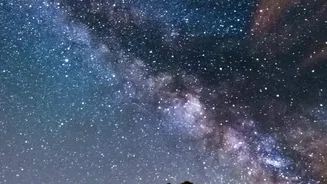
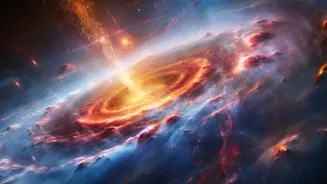
This wasn't a gentle merger; it was a violent, head-on crash. At the time of the impact, roughly 10 billion years ago, the Milky Way was much smaller than it is today. The Gaia Sausage galaxy, while a dwarf, was substantial, possessing a total mass more than 10 billion times that of our sun. The collision was a defining event in our galaxy's youth. The impact was so powerful that the dwarf galaxy was completely torn apart, its stars, gas, and dark matter scattered throughout the inner regions of the Milky Way. This cosmic wreckage is still all around us, providing astronomers with a fossil record of our galaxy's tumultuous past.
Rewriting the Galactic Blueprint
The impact of the Gaia Sausage was not just destructive; it was creative. The collision is credited with fundamentally reshaping the Milky Way's structure. The debris from the shattered galaxy helped form two of our galaxy's main components: the central bulge and the vast, spherical stellar halo that surrounds the main disk. The energy from the impact also 'puffed up' the young Milky Way's disk, making it thicker. Furthermore, the merger triggered a massive burst of star formation that lasted for billions of years, as the new supply of gas from the Sausage galaxy provided fresh fuel for stellar nurseries. Some researchers believe this cosmic firework show could have even contributed to the formation of stars within our own galactic neighbourhood.
Flipping a Galaxy on Its Head
Recent research presented in July 2026 suggests the collision had an even more dramatic effect: it may have caused the entire disk of the Milky Way to flip by more than 90 degrees. Using supercomputer simulations, astronomers at Durham University proposed this astonishing idea to explain a long-standing mystery: why the stars in the Milky Way's halo rotate so slowly compared to the fast-spinning disk. The models showed that a massive, head-on collision like the one with the Gaia Sausage is one of the key events that could lead to such a dramatic galactic tilt. This colossal somersault, unfolding over cosmic timescales, would have reoriented our entire galaxy.
Galactic Archaeology Unearths Our Past
The discovery of the Gaia Sausage merger is a triumph for the field of galactic archaeology. Just as archaeologists dig through layers of earth to understand human history, astronomers use the motion, position, and chemical makeup of stars to piece together our galaxy's formation history. The Gaia satellite has been instrumental, providing unprecedentedly accurate measurements for billions of stars. By studying the ghostly remnants of consumed galaxies like the Sausage, scientists can rewind the clock and understand the violent processes that built the stellar city we call home. These findings reveal that our galaxy is not a static island in space but a dynamic, evolving structure, built from the remains of its cosmic ancestors.