





The Soul of the Machine
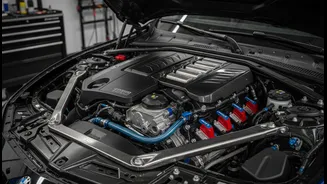
To understand the challenge facing BMW, one must first appreciate what makes an M3 an M3. It has never been just about speed. It is about the sensation of connection, what enthusiasts call “analogue emotion.” This is the tactile feedback through the steering
wheel, the crescendo of a high-revving inline-six engine, and the satisfying mechanical clunk of a gear change. For generations of drivers, the M3 has been a masterclass in this sensory experience. Every part, from the engine to the chassis, was engineered to communicate directly with the driver. It created a bond, a feeling that you were not just operating a machine, but partnering with it. This legacy is the M3’s greatest strength and, in the age of electrification, its most significant burden.
The Electric Conundrum
Electric vehicles (EVs) excel at many things, but replicating analogue feel has not been one of them. The instantaneous, silent torque and single-gear transmissions that make EVs so effortless also strip away the layers of mechanical interaction that performance drivers cherish. There is no rising engine note to signal your speed, no vibration to tell you the engine is working hard, and no intricate dance of clutch and shifter. The very silence and smoothness of electric propulsion can feel sterile to someone raised on combustion. This is the existential crisis facing the M3. How do you build a car defined by its engine when there is no engine? How do you create emotional resonance when the soundtrack is a synthetic hum and the feedback is managed by lines of code? This is not just an engineering problem; it’s a philosophical one.
Code Name: Heart of Joy
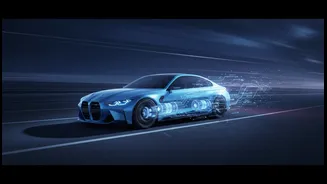
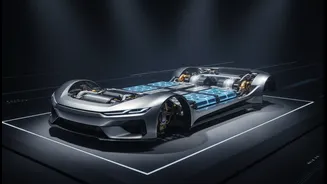
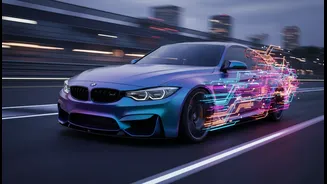
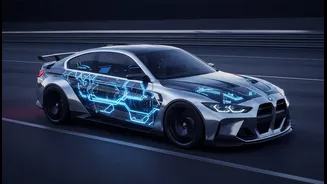
BMW’s answer lies not in trying to build a traditional EV, but in creating a new kind of software-defined performance machine. Recent announcements confirm the next M3, built on the “Neue Klasse” architecture, will be electric. Crucially, it will be a quad-motor setup, with one motor for each wheel, allowing for unprecedented control over torque delivery. The brain of this operation is a centralized computer system BMW has dubbed the “Heart of Joy.” This system processes driving dynamics—acceleration, braking, and stability—up to ten times faster than current technology. It aims to make the car feel more agile and predictive by managing power at each wheel with millisecond precision. According to BMW M's CEO, Frank van Meel, the goal is not just raw power, but control and consistency, lap after lap. To address the sensory void, BMW is also developing simulated gear shifts and curated sounds, not to simply mimic a gas engine, but to provide the driver with audible feedback about the car's speed and behavior.
A Digital Soul?
This brings us to the core of the debate: can software truly deliver emotion? The sceptics argue that no amount of code can replace the authentic feeling of mechanical components working in harmony. A simulated gearshift, they say, is just a gimmick, and a synthesised sound is a pale imitation of the real thing. It's the difference between a live orchestra and a digital synthesiser; both can play the same notes, but the feeling is entirely different. However, there is another perspective. The quad-motor system and the 'Heart of Joy' controller could unlock a new dimension of driving dynamics that a mechanical drivetrain could never achieve. The ability to vector torque at each wheel individually, in real-time, could create a car that feels preternaturally agile and connected to the driver's inputs. The sound and haptic feedback might not be ‘real’ in the traditional sense, but if they provide useful, engaging information, does it matter? The M3's history is full of transitions that purists initially resisted—from four cylinders to six, from naturally aspirated to turbocharged—each time, the car evolved and found a new way to deliver on its core promise.