







The Synchronized Social Boost
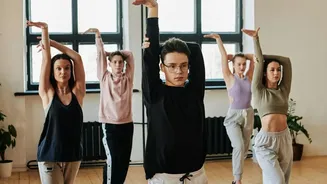
Humans are inherently social creatures, and group exercise taps into this fundamental need for connection. When you dance in a group, you're not just exercising; you're communicating non-verbally, cooperating with others, and sharing a common goal. This
sense of synchrony and shared purpose can strengthen social bonds and create a powerful feeling of unity and belonging. Research suggests this collective movement fosters trust and reduces feelings of isolation. This social component provides a layer of emotional and psychological support that a solitary workout simply cannot replicate. The accountability and encouragement from instructors and peers can also boost motivation, making you more likely to stick with your routine long-term.
An Unconscious Fix for Your Posture
Modern life often encourages slouching over desks and phones, but dancing acts as a natural corrective. Most dance styles require a strong core, spinal alignment, and a heightened sense of body awareness. From the elongated posture of ballet to the stable frame of ballroom, dance trains you to hold your body with intention. This consistent practice strengthens the core muscles—abdominals, back, and pelvic floor—that support your spine. Over time, this enhanced muscle memory and body awareness translate into daily life, helping you stand taller, move more confidently, and reduce strain caused by poor postural habits.
A Workout That Rewires Your Brain
While any physical activity is good for the brain, dancing presents a unique cognitive challenge that can significantly enhance memory and mental agility. Learning choreography requires you to remember steps, patterns, and sequences, directly exercising your short-term and long-term memory. This process stimulates neuroplasticity, which is the brain's ability to form new neural connections. One landmark study found that dancing was the only physical activity linked to a reduced risk of dementia, likely due to the mental effort it requires. The need to process rhythm, react to a partner, and navigate space simultaneously makes dancing a multitasking workout for the mind, improving skills like planning, focus, and problem-solving.
A Triple-Threat Mood Enhancer
Group dancing combats low moods from three different angles. First, like all exercise, it releases endorphins, the brain's natural mood-lifting chemicals that can help alleviate symptoms of depression and anxiety. Second, the music itself triggers the release of dopamine, a neurotransmitter associated with pleasure and reward. Third, the social connection and synchronized movement with others can produce oxytocin and serotonin, fostering feelings of trust, happiness, and well-being. This potent combination of physical activity, artistic expression, and social bonding makes group dancing an especially effective and enjoyable way to reduce stress and elevate your spirits.
The Verdict: Social vs. Solitary
Solitary workouts are incredibly valuable for targeted muscle building, focused training, and the meditative quiet that some people crave. However, when it comes to the synergistic benefits for posture, memory, and mood, group dancing often has the edge. Systematic reviews have found that while most physical activities are beneficial, dance can be equally and sometimes more effective for improving psychological and cognitive outcomes. The key is the combination of elements: dance challenges the brain with complex coordination, engages the body through dynamic movement, and enriches the spirit through music and social interaction. A solo run may clear your head, but a group salsa class rebuilds it with new connections—both neural and human.