







An Unexpected Transition
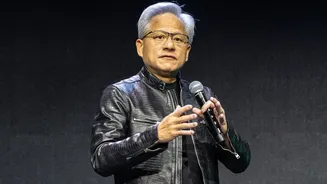
On November 12, 2026, Nvidia announced the immediate resignation of its co-founder and CEO of over 30 years, Jensen Huang. The departure of the iconic, leather-jacket-clad leader, who is widely seen as the visionary behind the AI revolution, sent shockwaves
through the tech industry and financial markets. The company's board appointed Colette Kress, Nvidia's long-serving Chief Financial Officer, as Interim CEO while it searches for a permanent successor. While the board expressed full confidence in Kress and the existing leadership team to ensure operations continue without interruption, the change has created a vacuum at the top of one of the world's most influential companies at a critical moment. Kress, in her first earnings call as interim chief, sought to reassure investors, stating it was 'business as usual' and that customers and partners remained fully supportive.
The Multi-Billion Dollar Legacy
Under Huang, Nvidia didn't just sell chips; it built an ecosystem. This strategy involved staggering financial commitments to secure its supply chain and fuel demand. In recent months, the company announced multi-billion dollar, multi-year agreements with manufacturing partners like Amkor, TSMC, and Samsung Electro-Mechanics to dramatically scale up capacity for everything from substrates to advanced packaging. One deal alone will see a partner, Kinsus, increase its dedicated manufacturing capacity for Nvidia by over 3.5 times, with expansions planned into 2028. Beyond manufacturing, Nvidia has also become a key financier for the AI boom. The company disclosed up to $118 billion in financial guarantees tied to AI infrastructure projects, helping customers secure the land, power, and facilities needed to deploy its systems. These massive bets were made to lock in supply and demand for years to come.
Wall Street's Watchful Eye
Despite reporting record quarterly revenues of $115.8 billion, investor confidence has been shaken. Nvidia's stock has been volatile, falling significantly since the leadership change was announced. Analysts and investors are now asking tough questions. The primary concern is whether a new leader will, or should, maintain Huang's aggressive spending strategy. Utkarsh Ahuja, a managing partner at Moon Pursuit Capital, noted that while earnings are strong, they reflect decisions made under Huang. The new test is whether the massive spending on AI infrastructure can generate sustainable returns, especially for smaller customers who may rely on external financing. The board has made it clear that it will not reinstate Huang, forcing the market to look forward. For now, analysts see a period of volatility as the company navigates the transition, with some questioning whether key partnerships, a hallmark of Huang's tenure, could be at risk.
Continuity or Course Correction?
The immediate challenge for Interim CEO Colette Kress and her eventual successor is to balance stability with strategic leadership. In a bid to maintain morale and project confidence, Kress has already brought forward employee pay raises and equity awards. The company's public stance is one of unwavering continuity. On a recent call, executives stressed that the product roadmap remains intact and that they foresee no interruptions. The company even raised its revenue growth forecast for the next fiscal year. However, the pressure is immense. A new, permanent CEO will need to quickly establish a clear vision. Will they double down on the massive capital commitments to prove the strategy is sound, or will they signal a more cautious approach to spending to appease a nervous Wall Street? The answer will define Nvidia's next chapter and could reshape the competitive landscape, with rivals like AMD and Broadcom watching closely for any potential shift in customer sentiment.