


A Needle in a Cosmic Haystack
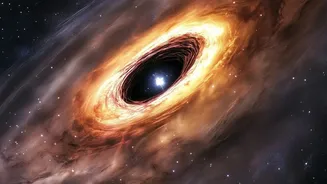
Finding black holes is one of astronomy's biggest challenges. By definition, they don't emit any light, making them invisible to conventional telescopes. Astronomers can sometimes spot them when they are 'feeding' on a nearby star, a process that heats
up material and releases tell-tale X-rays. But most black holes are thought to be dormant, drifting silently through space. While models suggest millions exist in the Milky Way alone, confirming their presence is incredibly difficult. This leaves a massive gap between theory and observation—a cosmic mystery that requires a new way of searching.
Harnessing the Power of the Crowd
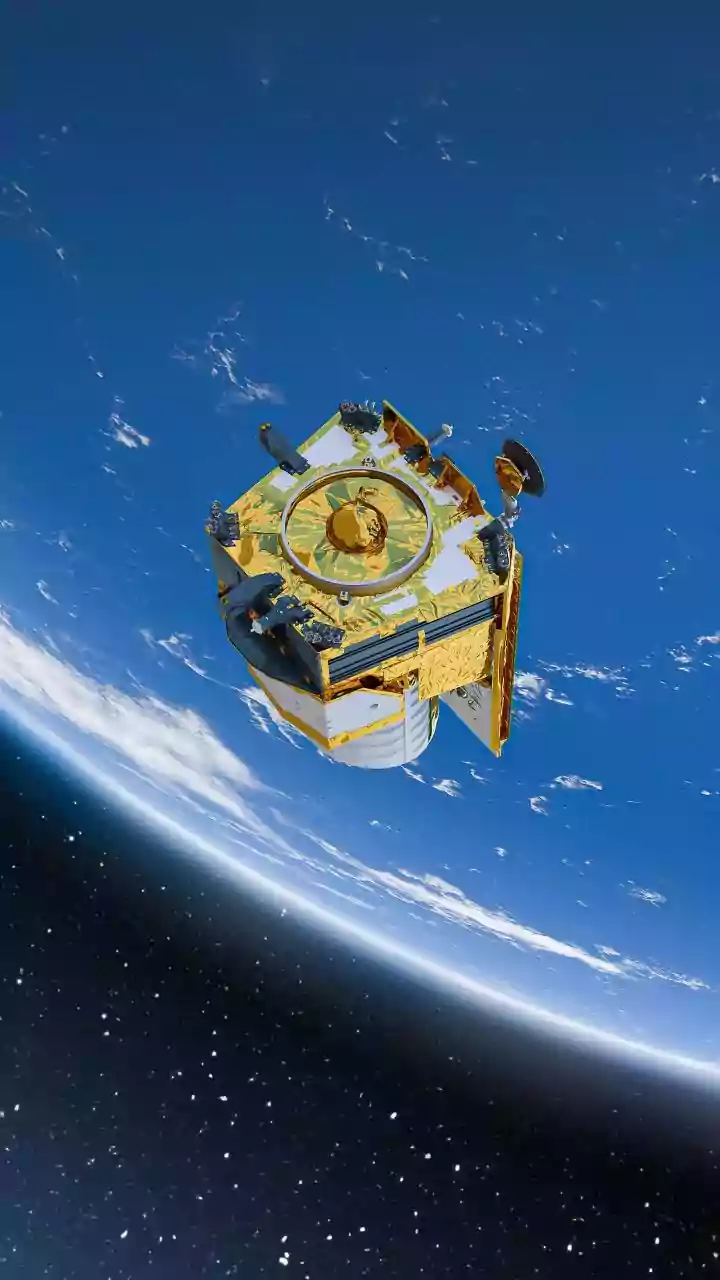
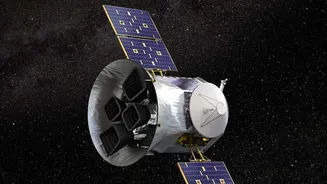
The Black Hole Hunters initiative, led by astronomers from the University of Southampton, is tackling this problem by enlisting the public. Hosted on the citizen science platform Zooniverse, the project invites volunteers to sift through vast amounts of data gathered by NASA's Transiting Exoplanet Survey Satellite (TESS). TESS monitors the brightness of hundreds of thousands of stars, and hidden within this data are potential clues to the whereabouts of black holes. Since its launch, the project has attracted tens of thousands of volunteers who have made millions of classifications, proving that people power can make a real dent in a monumental task.
The Cosmic Magnifying Glass
Volunteers aren't looking for black holes directly, but for their gravitational effects on light. The project focuses on binary systems, where a black hole orbits a normal star. If the alignment is just right, the black hole will periodically pass in front of its companion from our point of view. When this happens, the black hole's immense gravity acts like a magnifying glass, bending and briefly brightening the star's light. This phenomenon is known as 'gravitational self-lensing'. Volunteers are shown simple graphs, called light curves, that plot a star's brightness over time. Their task is to spot the characteristic spikes that could indicate a lensing event.
Why Human Eyes Still Matter
In an age of artificial intelligence, asking humans to look at graphs might seem old-fashioned. While AI is used to pre-screen millions of stars and flag potential candidates, it can be easily confused. Natural stellar flares or pulsations can mimic the signature of a black hole, leading to false positives. The human brain, with its superior pattern-recognition abilities, is often better at distinguishing a true signal from cosmic noise. The project ingeniously combines both approaches: AI performs the initial heavy lifting, and human volunteers provide the crucial final verification. Each graph is reviewed by multiple volunteers to ensure accuracy, averaging out individual mistakes and creating a reliable shortlist for professional astronomers to investigate further.
Democratizing Discovery
The Black Hole Hunters project does more than just accelerate the pace of discovery. It democratizes science itself, allowing anyone with a computer and a bit of curiosity to participate in frontier research. No background in astronomy is required; the project provides all the necessary training. According to Dr. Adam McMaster, one of the project's co-leads, each volunteer might be the one to find the very first of this new type of black hole system. By narrowing down the search, these citizen scientists help astronomers use precious and expensive telescope time more efficiently, pointing them exactly where they need to look next. This collaborative effort bridges the gap between millions of data points and the handful of confirmed discoveries, bringing us closer to understanding the true population of these enigmatic objects in our galactic neighbourhood.