







Welcome to the 'Holding Pattern'
That circling maneuver has a name: a holding pattern. Think of it less as aimless circling and more as a designated parking spot in the sky. Air Traffic Control (ATC) instructs pilots to enter these predefined, racetrack-shaped paths to safely manage
the flow of aircraft. The pilots, often with the help of the autopilot, fly a precise oval circuit around a specific navigational point, known as a 'fix', which can be miles from the airport itself. This isn't an improvised move; it's a highly structured procedure to ensure every plane maintains a safe distance from others while waiting for clearance to land.
Air Traffic Congestion
The most common reason for a holding pattern is simple traffic. Just like cars on a motorway during rush hour, airspace around major airports can get congested. If several planes are scheduled to land around the same time, or if an aircraft on the ground is slow to clear the runway, ATC uses holding patterns as a buffer. This allows controllers to sequence arrivals in an orderly fashion, ensuring each flight has ample space for a safe approach and landing. Your pilots are simply waiting for their assigned landing slot to open up.
Uncooperative Weather
Weather is a powerful factor in aviation. Sudden changes like thick fog, strong crosswinds, or a thunderstorm over the airfield can make an immediate landing unsafe. When this happens, ATC may place incoming flights into a hold, allowing them to wait at a safe altitude until conditions on the ground improve. During this time, the pilots are closely monitoring the latest weather reports and communicating with controllers to determine the best time to make their approach. It’s a proactive delay to ensure the landing is as smooth as possible.
Clearing the Runway
A runway must be completely clear before the next plane can land. An aircraft might need to hold if the runway is temporarily occupied. This could be due to a preceding aircraft taking longer than expected to taxi off the runway, or a necessary inspection being carried out on the tarmac to check for debris. In some cases, an emergency vehicle might need access. The holding pattern gives ground crews the time they need to ensure the landing strip is safe and ready for your arrival.
The Go-Around: An Aborted Landing
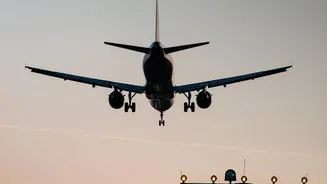
Sometimes, a plane will be on its final approach, very close to the runway, and then you'll hear the engines roar as it suddenly climbs back into the sky. This is called a 'go-around'. It's an aborted landing and a crucial safety maneuver. It can be initiated by either the pilot or ATC. Reasons include the approach being unstable (too high, too fast), a sudden change in wind, or the runway not being clear. After a go-around, the aircraft will typically circle around to rejoin the landing queue, making a second, safer attempt.
Minor Onboard Checks
In some instances, pilots might need a few extra moments to run through a checklist if a sensor gives an unusual reading. For example, they may want to double-check that the landing gear is correctly deployed or verify another system setting. A holding pattern provides the time and stable environment to perform these checks without the pressure of an immediate landing. It’s a calm, methodical way to ensure everything is in order. In situations where a plane needs to return shortly after takeoff, it might be too heavy to land safely. In this case, it will circle to burn fuel and reduce its weight.