




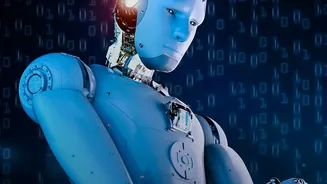

Musk's Surprising Prescription
When the person building advanced AI and humanoid robots offers career advice, you might expect a lecture on coding and data science. Instead, Elon Musk has repeatedly advised young people to embrace a wide-ranging education. During a recent interview
with China Media Group, he specifically recommended a blend of arts, sciences, and engineering. His core argument is that as AI and robots become more capable of performing specialized tasks, the most valuable human skill will shift from doing the work to defining what work needs to be done. This requires a depth of understanding that comes from pulling knowledge from multiple disciplines, not just one. He believes that a broad base of general knowledge is essential for our future interactions with hyper-intelligent machines.
Knowing What to Ask the Robots
Musk’s philosophy centres on a simple but profound idea: you need to know what to ask for. In a future where AI can execute complex commands, from writing software to analyzing data, the person with the advantage is the one who can formulate the right questions. He compares this to a more advanced form of 'prompt engineering', where the quality of the AI's output depends entirely on the quality of the human's instruction. A broad education provides the necessary context. For example, someone who understands only technology might build a technically perfect system, but someone who also understands psychology, history, and art will ask whether that system is useful, ethical, or beautiful. This ability to connect disparate ideas and see the bigger picture is what will allow humans to 'direct' the robots of the future, a role he sees as essential.
The Evolution of Human Work
This perspective reframes the conversation about AI and employment. Rather than predicting mass unemployment, Musk envisions an “evolution of roles.” He frequently points to historical parallels, like how digital computers replaced the job of the human 'computer'—people who once filled entire buildings to perform calculations by hand. He argues that no one today mourns the loss of that tedious work. Similarly, as AI absorbs more routine and digital tasks, human work will evolve towards roles that require creativity, critical judgment, and strategic oversight. While he acknowledges the transition will be “bumpy,” he ultimately predicts an “age of abundance” where the combination of AI and robotics could lead to a 'universal high income' and dramatically improve living standards for everyone. The challenge for society, he notes, is not just economic but also finding a sense of purpose when labour is no longer a primary source of meaning.
Why This Matters for India's Youth
For a young and aspirational country like India, which has a strong focus on engineering and technology education, Musk's advice is particularly relevant. It suggests that complementing technical prowess with a strong foundation in the humanities and arts is not a 'soft' option but a strategic career move. As AI tools become more integrated into every industry, from IT services to manufacturing, the ability to think critically and creatively will become a key differentiator. The future workforce in India may find that the greatest opportunities lie at the intersection of disciplines. Graduates who can combine technical skills with an understanding of human-centered design, cultural context, and ethical considerations will be best positioned to lead and innovate in an automated world. It's a call to build a holistic educational foundation that prepares students not for a single job, but for a lifetime of adapting and directing technological change.