




What Exactly is the Bullet Train Project?
At its core, the project is the Mumbai-Ahmedabad High-Speed Rail (MAHSR) corridor, a 508-kilometre line connecting India's financial capital with one of its major industrial hubs. Developed by the National High Speed Rail Corporation Limited (NHSRCL),
the project aims to slash travel time between the two cities from around eight hours by conventional rail to just under two hours. The corridor will feature 12 stations across Maharashtra, Gujarat, and Dadra and Nagar Haveli. This isn't just about speed; it's about creating a new artery for economic activity, fostering business growth and regional integration between two powerhouse cities. It was chosen over other potential routes because of high passenger demand and its potential to generate significant economic returns.
World-Class Tech on Indian Tracks
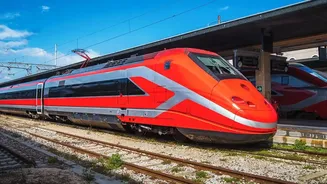
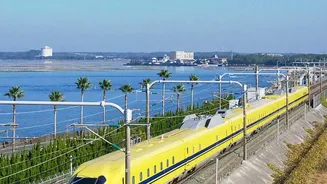
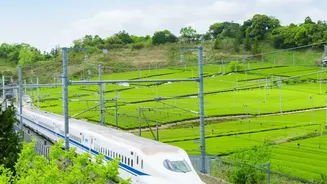
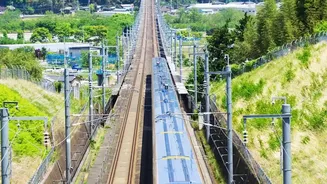
India is borrowing from the best for this venture, adopting Japan's famed Shinkansen technology. Known for its impeccable safety record—zero fatal accidents in over 50 years of operation—and remarkable punctuality, the Shinkansen system is a complete ecosystem. It involves dedicated tracks with no level crossings, an advanced Automatic Train Control system to maintain safe distances, and trains with aerodynamic designs to minimize noise and vibration at speeds up to 320 km/h. The project also includes sophisticated features like an early earthquake detection system, which can automatically slow or stop trains, a critical adaptation for a seismically active region.
How Far Along is Construction?
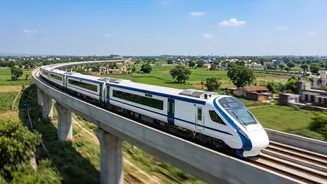
After initial delays, primarily due to land acquisition challenges and the pandemic, construction has gained significant momentum. As of September 2026, progress is visible across the corridor, especially in Gujarat. Railway Minister Ashwini Vaishnaw recently confirmed that construction on the Vapi-Surat section is expected to be completed by December 2026. Work on viaducts, piers, and major river bridges is advancing rapidly, with the first coach manufactured for testing now ready. This marks a key shift from civil construction to preparing for actual operations, with track laying and electrical work now proceeding in parallel in several sections.
What is the 'Make in India' Angle?
While the core technology is Japanese, a significant part of the project is being localized under the 'Atmanirbhar Bharat' initiative. An indigenously developed bullet train prototype is currently undergoing testing. State-owned firms are manufacturing key components, and the project has spurred domestic production of everything from steel to cement. This focus on domestic manufacturing is not just about cost-saving; it's about building an entire ecosystem for high-speed rail technology within India. The project is already credited with creating over one lakh jobs in the construction phase alone, with thousands more permanent roles expected once the line becomes operational.
When Can We Actually Ride It?
The government is targeting a phased launch. According to recent announcements by the Railway Minister, the first section of the bullet train is expected to become operational in 2027, likely starting with the Surat-Bilimora stretch in Gujarat. An indigenous prototype is scheduled to begin track testing by May or June 2027. The full 508-km corridor is projected to be completed and operational by 2028 or 2029. This phased approach allows the system to be tested and refined on a smaller scale before the entire line is opened to the public, a common practice for large-scale infrastructure projects worldwide.