




A New Plan for Solar on Water
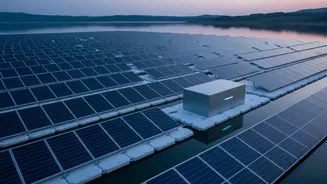
The Union Cabinet has approved the Pradhan Mantri Surya Sarovar Yojana (PM-SSY), a scheme designed to significantly expand India's floating solar capacity. With a budget of ₹5,070 crore, the plan sets a clear target to install 5,000 megawatts (5 GW) of floating solar projects
across the country. This marks a monumental leap from the current installed capacity of approximately 700 MW. The scheme, which will sanction projects between the financial years 2026-27 and 2030-31, aims to make floating solar a mainstream component of India's renewable energy strategy rather than a niche technology. To accelerate development, the government will provide financial assistance of ₹1 crore per megawatt upon successful commissioning, along with further funds for crucial feasibility studies.
The Twin Benefits: Saving Land and Water
One of the primary drivers behind this initiative is India's increasing struggle for land. As the country rapidly expands its solar footprint, finding large, non-agricultural tracts for ground-mounted solar farms becomes more challenging. Floating solar, or 'floatovoltaics', provides an elegant solution by utilizing the surfaces of existing water bodies like reservoirs, lakes, and dams. This not only frees up land for agriculture and other essential uses but also offers additional environmental benefits. The water beneath the panels provides a natural cooling effect, which can increase the efficiency and electricity generation of the solar modules compared to their land-based counterparts. Furthermore, the panel arrays help reduce water evaporation from reservoirs, a critical advantage for a water-stressed nation.
More Than Panels: Integrating Battery Storage
A key and innovative feature of the PM-SSY is its mandate for integrated energy storage. Each floating solar project developed under the scheme must include a co-located Battery Energy Storage System (BESS) with a minimum of two hours of backup. This amounts to a total of 10,000 MWh of storage capacity nationwide. This requirement is a strategic move to address one of the main limitations of solar power: its intermittency. Solar panels generate electricity only during the day, while peak energy demand often occurs in the evening. By storing excess daytime power, these batteries can release it into the grid when it's needed most, enhancing grid stability and reliability. This makes renewable power more dependable and useful, transitioning it from a variable source to a firm and dispatchable one.
Navigating the Challenges Ahead
Despite the clear advantages, the path to scaling up floating solar is not without its hurdles. The technology is still more expensive than traditional ground-mounted solar, with upfront costs for specialized buoyant structures, mooring systems, and waterproof cabling being 20-30% higher. There are also significant technical and engineering complexities involved in designing installations that can withstand wind, waves, and fluctuating water levels over a 25-year lifespan. Moreover, the long-term environmental impact on aquatic ecosystems needs careful consideration. While the panels can limit algal growth, they also reduce sunlight penetration, which could affect aquatic life. The new scheme acknowledges these risks by providing funds for detailed environmental assessments before projects are approved.
Tapping into a Vast Potential
While the 5 GW target is ambitious, it represents just a fraction of India's total potential. A comprehensive assessment by the National Institute of Solar Energy (NISE) estimates that the country's reservoirs and other water bodies could host approximately 102 GW of floating solar capacity. This highlights the immense scale of the opportunity that lies ahead. The PM-SSY is therefore a crucial first step, intended to create a robust ecosystem, standardize protocols, and build confidence among developers and investors. By successfully implementing this initial phase, India can unlock a much larger pipeline of projects, contributing significantly to its goal of achieving 500 GW of non-fossil fuel energy capacity by 2030.