




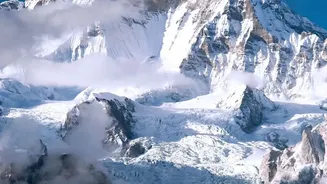
The Lifeline and The Threat
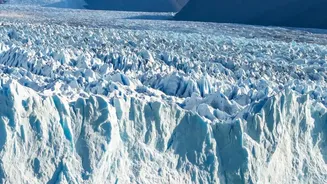
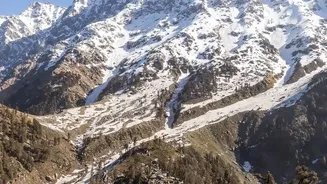
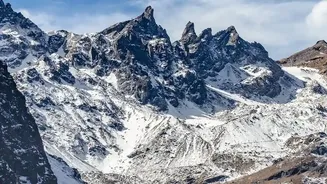
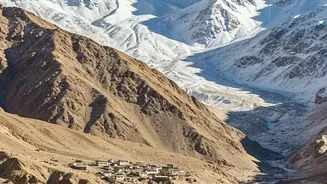
Spanning from Ladakh to Arunachal Pradesh, India’s glaciers are the source of great rivers like the Ganga, Indus, and Brahmaputra. They are a critical component of the country's water security, providing meltwater that sustains nearly 800 million people
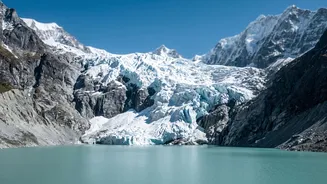
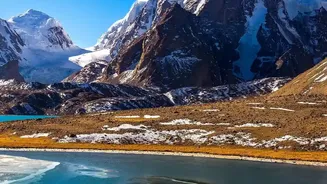
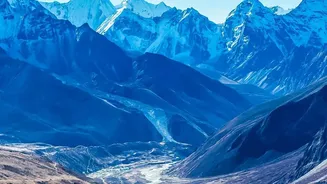
downstream, especially during dry seasons. This makes them an invaluable natural asset. However, accelerated melting is not just about losing a resource; it's about creating new, immediate dangers. As glaciers retreat, the meltwater often pools to form vast lakes, which are frequently held in place by nothing more than unstable dams of loose rock and debris left behind by the ice. This sets the stage for a significant and growing hazard.
The Danger of Bursting Lakes
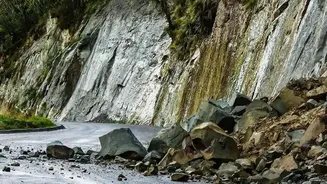
The most urgent reason for monitoring is the risk of Glacial Lake Outburst Floods, or GLOFs. A GLOF occurs when the fragile natural dam containing a glacial lake fails, releasing an immense volume of water, mud, and boulders downstream with catastrophic force. These events can be triggered by a number of factors, including heavy rainfall, earthquakes, or a large chunk of ice or rock falling into the lake. The resulting flash flood travels with terrifying speed, giving downstream communities very little time to react. The disaster in Sikkim in October 2023, when a part of the South Lhonak Lake burst, and a similar event in Nepal in August 2026, serve as devastating reminders of this threat. India's disaster management authorities have identified approximately 200 high-risk glacial lakes across the Himalayas that require constant vigilance.
Beyond Floods: Avalanches and Water Scarcity
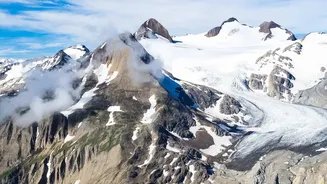
The risks are not limited to GLOFs. As rising temperatures destabilise the ice, a new concern has emerged: 'hanging glaciers'. These are massive ice formations perched precariously on steep mountain slopes. A recent study identified over 200 such unstable glaciers in just one Himalayan basin, which could break off and cause massive ice and rock avalanches. Beyond these immediate dangers lies a slower, more insidious threat to long-term water security. While accelerated melting temporarily increases water flow in rivers, this is a short-lived phase. As glaciers continue to shrink and eventually disappear, the reliable flow of water into India's most important rivers will decrease, threatening everything from drinking water supplies to agriculture for hundreds of millions of people.
The Challenge of Keeping Watch
Monitoring these glaciers is a monumental task. Their remote, high-altitude locations and the harsh weather make on-the-ground fieldwork incredibly difficult, expensive, and dangerous. Consequently, only a tiny fraction of India's glaciers are physically monitored for changes in their mass and health. To overcome this, agencies like the Indian Space Research Organisation (ISRO) rely heavily on satellite technology. Satellites can track changes in glacier area, monitor the expansion of dangerous lakes, and measure ice velocity over time. However, even this high-tech approach has its limits. Thick layers of debris can cover a glacier, making it hard for satellites to distinguish between ice and rock, sometimes requiring physical expeditions to verify the data.