





The Gym-Goer's Trusted Ally
For decades, creatine has been one of the most researched and reliable supplements in the fitness world. It’s a naturally occurring compound that our bodies produce and store in our muscles, playing a critical role in energy production. Specifically,
it helps regenerate adenosine triphosphate (ATP), the main source of fuel for short, explosive movements like sprinting or heavy lifting. When combined with resistance training, studies have consistently shown that creatine supplementation helps athletes and active individuals increase strength, build more muscle mass, and improve recovery between workouts. This is why you'll find it in the shaker bottles of everyone from professional athletes to weekend warriors looking to get more out of their training sessions. Its reputation is built on a solid foundation of helping people push harder and achieve greater gains from their physical efforts.
A Surprising New Discovery
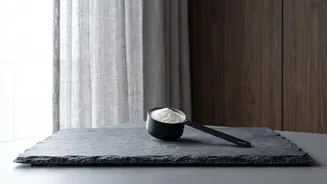
A recent 12-week study from Texas A&M University has added a fascinating twist to the creatine story. Researchers investigated the effects of creatine on healthy, middle-aged adults between 45 and 65. Participants were divided into groups, with some following a structured exercise and diet program and others remaining sedentary. In both scenarios, some individuals were given a daily 10-gram dose of creatine monohydrate, while others received a placebo. The most striking finding came from the non-exercising group: those who took creatine without a workout regimen still gained approximately 2.4 pounds of lean tissue mass over the 12 weeks. They also showed measurable improvements in both leg press and bench press strength, despite not actively training. This suggests that creatine may have muscle-preserving and even strength-building properties that function independently of exercise.
How Might It Work Without Workouts?
The question then becomes: how does creatine deliver benefits without the stimulus of exercise? While its primary role is in rapid energy recycling for active muscles, other mechanisms are at play. One theory is that creatine increases water content within muscle cells, a process known as cell volumization. This swelling can signal the cells to ramp up protein synthesis and reduce muscle protein breakdown, creating an environment that favors muscle maintenance and growth. Other studies, particularly those involving limb immobilization, have shown that creatine can help attenuate, or reduce, the amount of muscle mass and strength lost during periods of inactivity. By ensuring cells are well-hydrated and have ample energy reserves, creatine may help protect muscle tissue from the wasting effects of disuse.
More Than Just for Athletes?
These findings could significantly broaden the scope of who can benefit from creatine. While athletes will continue to use it for performance enhancement, its potential to support muscle health without exercise opens up possibilities for other populations. This is particularly relevant for older adults, who naturally experience age-related muscle loss, a condition known as sarcopenia. Maintaining muscle mass is crucial for mobility, balance, and overall independence in later life. Furthermore, individuals recovering from injury or surgery who face periods of immobilization could potentially use creatine to mitigate muscle atrophy and preserve strength, making their rehabilitation process smoother. The new research suggests creatine could become a valuable tool for preserving function when regular exercise isn't possible.
Putting It All in Perspective
While the results are exciting, it's important to view them with a clear lens. The researchers themselves note that the benefits were even greater when creatine was combined with exercise. The group that exercised and took creatine saw larger gains in lean mass (nearly three pounds) and strength, alongside a reduction in body fat. It's also worth noting that the evidence on creatine's benefits during inactivity has been mixed in the past, with some studies on leg immobilization showing no effect. This new study is promising but small. Therefore, creatine should not be seen as a replacement for physical activity. Exercise remains the most powerful tool for building muscle, improving cardiovascular health, and promoting overall well-being. Think of this potential new benefit as another tool in the toolbox, not a magic bullet that makes the gym obsolete.