


The Final Push After Early Delays
First launched in 2017, the Mumbai-Ahmedabad High-Speed Rail (MAHSR) project aims to connect India's financial capital with the major economic hub of Ahmedabad via a 508-kilometre line. While the initial years saw significant delays, particularly with land
acquisition in Maharashtra, the path has now been cleared. With 100% of the required land now acquired across Gujarat, Maharashtra, and Dadra and Nagar Haveli, construction is proceeding at an unprecedented pace. This breakthrough has been crucial, allowing civil contracts to be awarded and work to commence along the entire corridor, silencing earlier skepticism about the project's timeline.
Gujarat's Impressive Construction Sprint
The Gujarat section of the corridor has been the poster child for the project's progress. As of mid-2026, a substantial portion of the elevated viaduct has been constructed. Pier work has been completed over hundreds of kilometers, and girder launching is advancing rapidly. Several river bridges on the Par, Purna, and Mindhola rivers, among others, are already complete. Stations in Gujarat, including those in Vapi, Surat, Vadodara, and Ahmedabad, are in advanced stages of construction. The Surat station, with its diamond-inspired design, has its main structure finished, with interior work now underway. This visible progress in Gujarat provides a tangible glimpse of what the final operational line will look like.
Maharashtra Is Catching Up Fast
While progress in Maharashtra initially lagged, recent months have seen a significant acceleration. Construction on the 135-km elevated stretch in the state is in full swing, with pier construction and girder launching making rapid headway. Work is actively progressing on the three elevated stations at Thane, Virar, and Boisar. A key engineering challenge in this section is India's first undersea rail tunnel, a 7-km stretch beneath Thane Creek. The assembly of massive tunnel boring machines for this task marks a critical milestone. At the corridor's starting point, excavation work for the underground station at Mumbai's Bandra Kurla Complex (BKC) is also nearing completion, setting the stage for the final link in the high-speed chain.
The Shinkansen Technology Powering the Ride
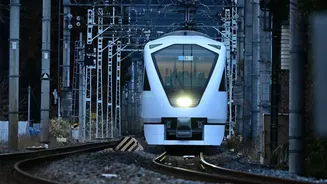
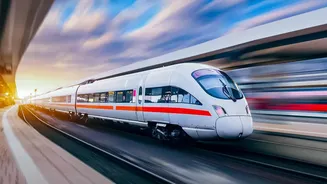
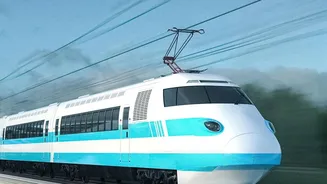
The project is being built with proven Japanese Shinkansen technology, renowned for its safety and reliability. Trains are designed to operate at a speed of 320 km/h, which will slash the journey time between Mumbai and Ahmedabad from over six hours to just about two. A key feature being implemented is the 'J-Slab' ballastless track system, used for the first time in India. This system is designed for high-speed stability and reduced maintenance. The trains themselves, though based on Japanese design, are part of the 'Make in India' initiative, with the first prototypes being developed indigenously.
What to Expect from the 2027 Trials
According to the Union Railway Minister, the first trials for the bullet train are slated to begin between May and June of 2027. These initial tests will likely take place on the Surat-Bilimora section in Gujarat, which is expected to be the first segment commissioned for service. These trials are essential to validate the performance and safety of both the indigenous trainsets and the newly laid infrastructure at high speeds. Following a testing period of a few months, a phased commercial rollout is planned. The full corridor is expected to become operational in stages, with the complete Mumbai-Ahmedabad connection anticipated by 2029.