


The Ultimate Long-Haul Problem
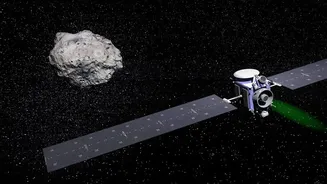
A trip to Mars and back could take years. Packing all the necessary food is practically impossible due to weight and space limitations on a spacecraft. For a four-person crew on a three-year mission, pre-packaged meals could weigh over 10,000 kilograms.
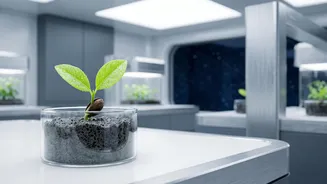
Furthermore, the vitamins in prepackaged foods degrade over time, posing a health risk to astronauts. The only viable solution for long-term exploration is for crews to grow their own fresh produce. This creates a self-sustaining system, providing essential nutrients, variety to combat menu fatigue, and even psychological benefits. Astronauts on the International Space Station (ISS) have reported that gardening reduces stress and provides a meaningful connection to Earth. But to create a farm on Mars, you first need to get your seeds there alive and well.
Cosmic Rays and the Seed-Slaying Void
Space is an incredibly hostile environment for biological material. Unlike on Earth, which is protected by its atmosphere and magnetic field, seeds in deep space are exposed to a brutal combination of threats. The biggest is cosmic radiation, a constant barrage of high-energy particles that can damage or destroy a seed's DNA and other essential molecules. This can reduce or prevent germination, or lead to developmental abnormalities in the plants that do grow. Experiments have shown that even a six-month journey in orbit can accelerate the aging process of seeds. Add in extreme temperature fluctuations and the vacuum of space, and you have a recipe for disaster for any aspiring Martian farmer. A seed's tough outer coat offers some protection, but for a years-long journey, it’s often not enough.
A Vault Against the Void
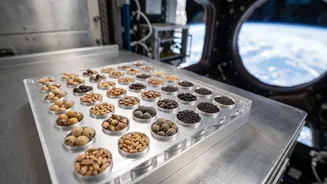
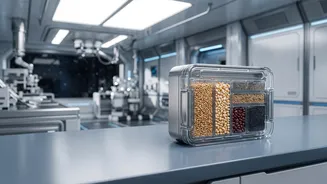
Scientists at NASA and other space agencies are actively tackling this problem through various experiments. A major line of research involves testing seeds by exposing them to the harsh environment outside the ISS. In missions like RAD-SEED and MISSE-SEED, researchers placed seeds from crops like lettuce, tomatoes, and radishes in special containers on external platforms for months at a time. Upon their return to Earth, scientists study their germination rates, growth, and any molecular changes compared to control seeds left on the ground. The results so far have been mixed but promising. Many seeds have survived, though some show delayed germination or other changes. These experiments help engineers design better-shielded containers to protect the seeds during transit, potentially involving specialized insulation or materials that block radiation.
Building the Perfect Space Garden
Not all crops are created equal when it comes to space farming. The ideal candidates are plants that are fast-growing, compact, nutritious, and require minimal resources. Leafy greens like lettuce and kale, along with radishes and some types of peppers, have been successfully grown on the ISS in growth chambers like the Vegetable Production System, or 'Veggie'. These systems use LED lights that glow with a characteristic magenta hue, providing the red and blue light wavelengths plants need most for photosynthesis. Scientists are also developing new methods for planting, such as using a water-soluble 'seed film' that makes handling tiny seeds easier in microgravity. Looking further ahead, researchers are even genetically engineering plants, like ever-flowering plum trees, that are better suited for the challenges of space.