








Meet Amalia: A New Kind of AI
Amalia is not your typical chatbot. Launched on July 1, 2026, it is Portugal's first open-source artificial intelligence model. Named in honor of the iconic fado singer Amália Rodrigues, the project is also an acronym for Automatic Multimodal Language
Assistant with Artificial Intelligence. Developed by a consortium of Portuguese universities with government backing and EU funding, Amalia is designed to be a foundational technology. This means it isn't a single product you can buy off the shelf. Instead, it’s a powerful base that companies, universities, and public institutions can use to build their own specialized AI applications. The entire project, including its source code and training data, is open-source, promoting transparency and allowing developers to adapt it for specific needs, from public services to private industry.
Reimagining the Museum Visit
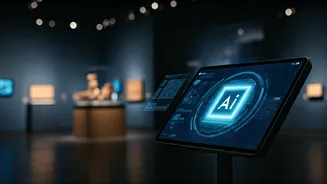
One of the most exciting initial applications for Amalia is in the cultural sector, specifically as a virtual museum guide. Instead of relying on pre-recorded audio hardware, museums can build applications on top of Amalia to offer visitors a dynamic and interactive experience. A visitor could ask an Amalia-powered guide specific questions about an artifact in their own language and receive an instant, detailed response. The AI can be trained on a museum's specific collection, including wall labels, catalogs, and academic papers, ensuring the information is accurate and curated. This frees up human docents and guides from answering repetitive questions, allowing them to focus on more in-depth storytelling, leading specialized tours, and engaging with visitors on a more personal level. The goal is to enhance the visitor experience, making it more personal and accessible.
The Classroom’s Newest Helper
In the field of education, Amalia is poised to act as an intelligent teaching assistant. The technology can help teachers with tasks like lesson planning, creating educational materials, and even providing personalized support to students. For example, an Amalia-based tool could help a student who is struggling with a particular concept by offering alternative explanations or practice exercises, adapting to their individual learning pace. This doesn't replace the teacher but rather augments their capabilities, handling some of the more time-consuming administrative and preparatory work. By doing so, it allows educators to dedicate more of their valuable time to direct instruction, mentoring, and addressing the unique social and emotional needs of their students.
More Than Just Code
The development of Amalia is part of a broader European push for what is being called "AI sovereignty." By creating their own powerful, open-source models, countries like Portugal, France, and Germany aim to reduce their reliance on technology developed by major US corporations. As Portuguese Prime Minister Luís Montenegro stated at the launch, strategic autonomy is increasingly tied to artificial intelligence. Building a model specifically trained on European Portuguese ensures that the nuances of the language and culture are preserved. Furthermore, running the AI on powerful local supercomputers helps ensure that sensitive data remains secure within national borders, a crucial consideration for applications in public services and defense.