





A New Martian Mystery
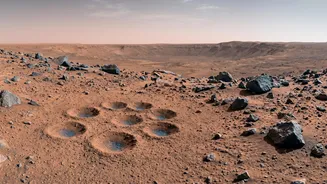
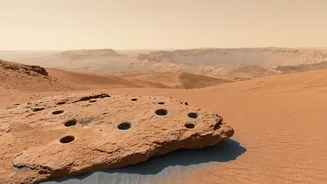
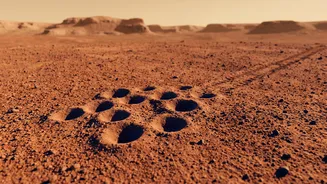
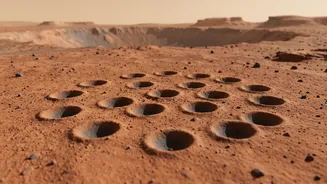
While travelling through a region known as Valle Grande on the slopes of Mount Sharp, the Curiosity rover spotted a collection of peculiar pits dotting the bedrock. Mars is no stranger to holes; the planet is constantly bombarded by meteorites. But these
newly discovered depressions are different. According to NASA scientists, they are unusually broad and shallow, and they defy easy explanation. Dr. Michelle Minitti, a scientist on the rover's camera team, noted that even after more than a decade on the surface, "Mars continues to surprise." The pits, some measuring about a centimetre across, were intriguing enough for the mission team to pause and take a closer look.
The Search for Clues
On Earth, similar holes can form when a harder rock or pebble gets embedded in softer bedrock. Over time, the surrounding softer material erodes away, and eventually, the harder object is dislodged, leaving a small cavity behind. However, in this Martian case, scientists were baffled because there were no obvious pebbles or nodules nearby that looked like they once occupied the pits. To investigate further, the rover used its Mars Hand Lens Imager (MAHLI) for close-up shots and its Mastcam to capture overlapping stereo images of the terrain. This data will allow NASA to create detailed 3D models of the holes, helping them measure their precise shapes and depths to work backwards and hopefully uncover how they were formed.
Fourteen Years of Discovery
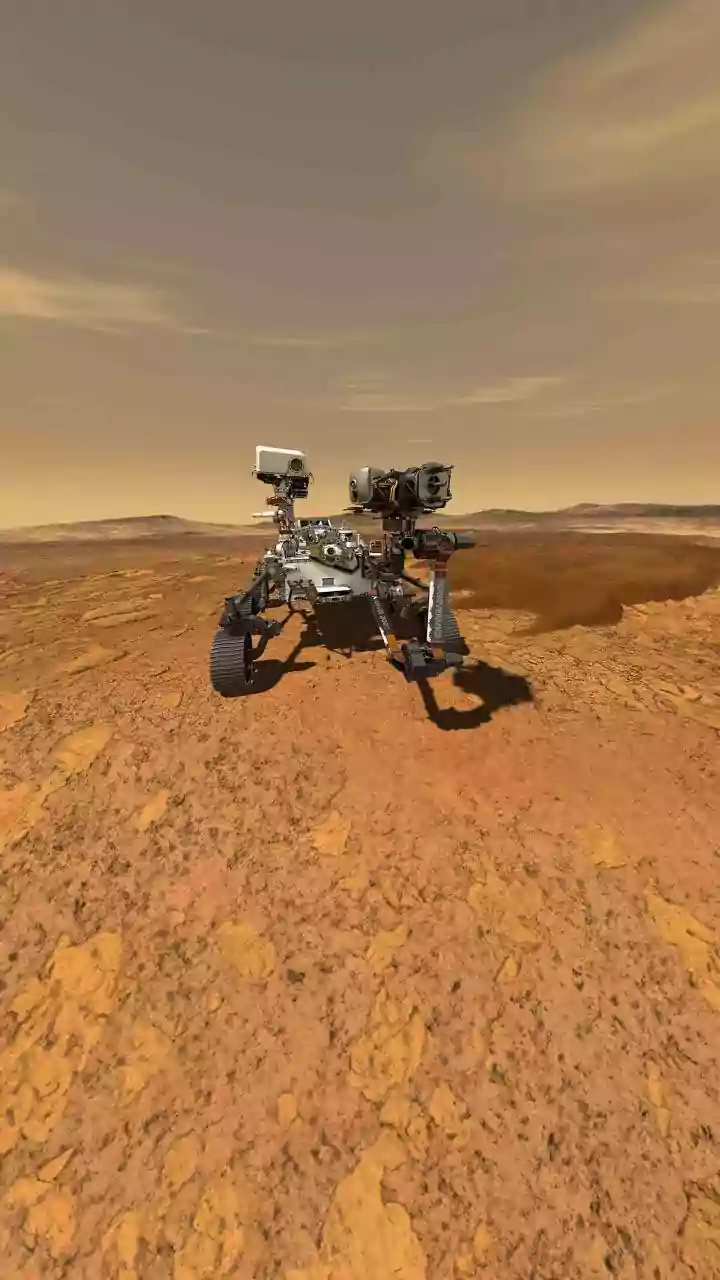
The Curiosity rover, which landed in Gale Crater on August 6, 2012, has far outlived its initial two-year mission. This car-sized mobile laboratory was designed not for speed, but for detailed chemical analysis of Martian rocks and soil. Its primary goal has been to determine whether Mars ever had the right environmental conditions to support microbial life. In its first year, it confirmed the existence of an ancient lakebed in Gale Crater, a landmark discovery. The rover has been ascending the 5.5-kilometre-high Mount Sharp since 2014, reading the story of Mars's past climate in its layers. This latest discovery of strange holes occurred as Curiosity explores a geologically rich area known as the Gediz Vallis region, which is believed to have been shaped by powerful debris flows billions of years ago.
Why These Small Holes Matter
A few small holes might not seem like a major discovery, but in planetary science, every unusual feature is a potential clue to the planet's history. The region where the holes were found is already of great interest. The rock layers are changing rapidly as the rover climbs, suggesting the environment on ancient Mars underwent swift transformations. Understanding how these pits were formed could reveal a previously unknown geological or erosional process. It could tell us more about the properties of the rock itself, and the conditions—perhaps involving wind or even long-gone water—that shaped it. These findings add another layer to the complex history of Mars that Curiosity is slowly uncovering, from a world that was once wetter and potentially habitable to the cold, dry desert we see today.