




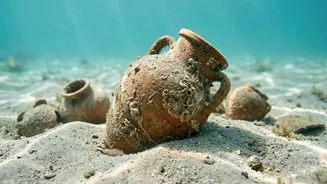

A Discovery Deep Beneath the Waves
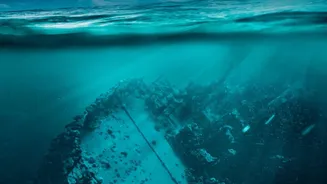
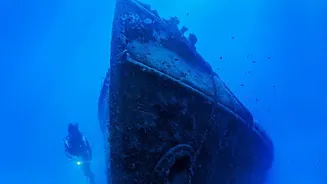
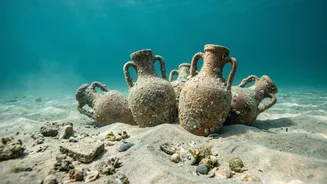
A team of underwater archaeologists from Akdeniz University, led by Associate Professor Hakan Öniz, made the remarkable find. Lying scattered on the seabed, about 100 feet below the surface, was the cargo of a long-lost merchant ship. While the wooden
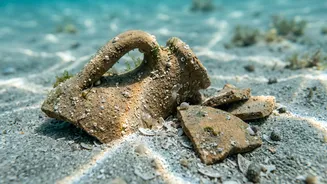
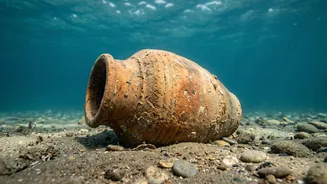
hull of the vessel has disintegrated over the millennia, more than 30 ceramic storage jars, known as amphorae, remain as silent witnesses to its final voyage. The discovery, first documented in 2024 but with key details only now emerging, has been hailed by Turkey's Minister of Culture and Tourism as potentially the world's oldest shipwreck.
A Time Capsule from the Bronze Age
The significance of the wreck lies in its incredible age. Dating back 4,400 to 4,700 years, it belongs to the Early Bronze Age. This places the vessel's journey around the same time the first great pyramids were being constructed in Egypt. Without the ship's timber for direct radiocarbon dating, researchers established its age by comparing the style and decoration of the amphorae to other pottery found at ancient sites in Egypt and the Middle East. This find predates other famous Bronze Age wrecks, like the Uluburun shipwreck (also found in Turkey), by more than a millennium, pushing back our understanding of organised, long-distance sea trade.
Uncorking the Past: A Cargo of Wine and Oil
The large, two-handled jars strongly suggest the ship was carrying valuable liquid goods. Archaeologists widely believe the cargo was likely olive oil or wine, staple products of the ancient Mediterranean economy. Incredibly, some of the recovered jars still contain a glossy residue, a lingering trace of their ancient contents. One archaeologist who examined the finds reported she 'nearly fainted' upon seeing how much material remained after nearly five millennia underwater. Scientific analysis of these residues is underway to confirm their exact nature, with tree resin also being a possibility. These tests will provide concrete answers about what this ancient ship was transporting.
Rewriting Ancient Trade Routes
This single shipwreck has the potential to reshape our knowledge of early global commerce. Analysis of the clay used to make the amphorae suggests they were produced in workshops in the Jordan Valley. Similar jars have been found in Egypt, Crete, and even the site of ancient Troy. This suggests the ship was part of a surprisingly sophisticated trade network connecting the Levant (modern-day Israel, Jordan, and Syria) with markets to the west. Researchers theorise the small vessel, estimated to be about 33 feet long, was sailing westward when it sank. This discovery proves that complex, international trade routes across the Mediterranean were active much earlier than previously confirmed.
Clues to Life at Sea
Beyond the main cargo, the site offers other intriguing clues. Three stone anchors were found nearby, similar in design to those used during the Bronze Age, which could shed light on ancient anchoring technology. One particularly unusual jar had two holes in its side. Researchers have speculated that it may have been used as a churn, suggesting sailors might have kept live goats on board to produce their own butter or cheese during long voyages. These small details help to paint a more vivid picture not just of ancient trade, but of the daily lives of the mariners who risked everything on the open sea.