



Meet IMAP, Our New Cosmic Cartographer
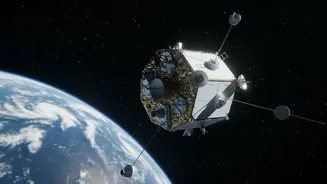
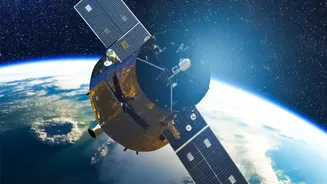
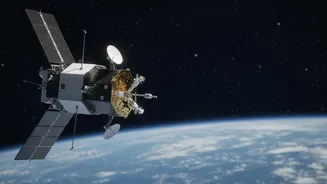
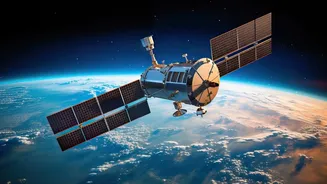
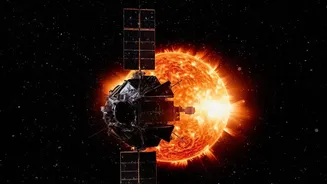
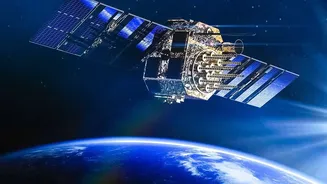
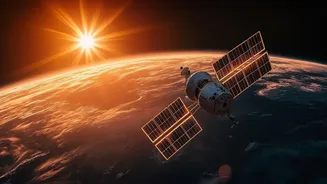
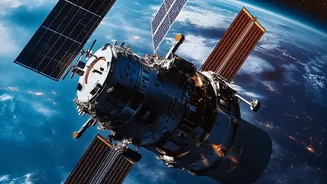
Launched in September 2025, NASA's Interstellar Mapping and Acceleration Probe, or IMAP, is a state-of-the-art observatory on a crucial mission. Think of it as a celestial map-maker, stationed about 1.5 million kilometres from Earth in the direction of the sun.
Its primary job is to study the heliosphere—a vast protective bubble created by the sun's wind that envelops our entire solar system. This bubble is our first line of defence against harsh galactic radiation. IMAP carries a suite of ten advanced instruments to 'taste' and 'see' the particles flowing from the sun and from the deep space beyond our solar system's borders. Its goal is to understand the dynamic boundary where the sun's influence ends and interstellar space begins, a frontier we know surprisingly little about.
Decoding the Solar Wind
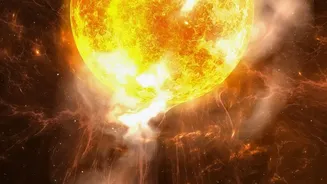
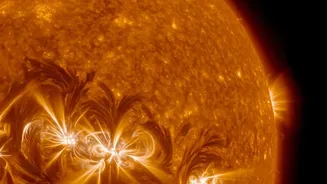
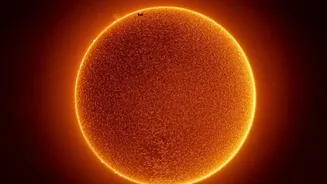
The sun is not just a ball of light and heat; it constantly exhales a stream of charged particles—mostly protons and electrons—called the solar wind. This material blasts away from the sun's upper atmosphere at incredible speeds, often between 400 and 800 kilometres per second. While invisible to our eyes, this wind permeates the entire solar system. It carries with it the sun's magnetic field, creating a complex and ever-changing environment known as space weather. Sometimes, the sun releases much more intense bursts of particles, known as coronal mass ejections (CMEs). It is these 'storms' in the solar wind that can have the most dramatic effects on planets, including our own.
Earth's Invisible Shield and Its Cracks
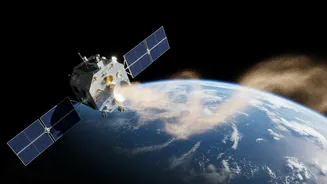
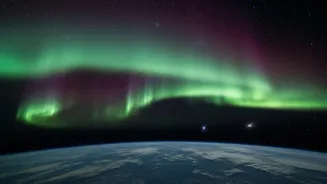
Fortunately, Earth has a powerful defence system: its magnetic field, or magnetosphere. This field deflects the majority of the solar wind, protecting our atmosphere and life on the surface. When particles from the solar wind interact with our magnetosphere, they can create the beautiful auroras—the Northern and Southern Lights. However, our shield is not impenetrable. A particularly strong gust of solar wind or a direct hit from a CME can squeeze and disturb the magnetosphere, triggering a geomagnetic storm. These storms can induce electrical currents on the ground, potentially overloading power grids. They can also disrupt radio communications and damage the sensitive electronics of the thousands of satellites we rely on for GPS, broadcasting, and financial transactions. Space agencies like ISRO closely monitor solar activity to protect Indian satellites from such events.
What the First Batch of Data Reveals
The headline news is the first major public release of IMAP's findings, announced by NASA on August 7, 2026. This dataset, gathered by seven of the spacecraft's ten instruments, provides an unprecedentedly clear picture of the solar wind near Earth. The information includes detailed measurements of the solar wind's speed, temperature, and density, as well as the strength and direction of the interplanetary magnetic field it carries. By making this data public, scientists from around the world can now dive in, cross-reference it with other observatories, and begin piecing together a more complete model of our space environment. It's the raw material from which future discoveries about the sun's behaviour and its impact on the solar system will be built.
Reading the Future of Space Weather
So, how does one 'read' this new view? For the average person, it's not about analysing raw data but understanding its implications. IMAP's continuous stream of information acts as a sophisticated early-warning system. By measuring the solar wind before it reaches Earth, forecasters at agencies like NOAA can predict the arrival and intensity of a geomagnetic storm with greater accuracy. This gives power grid operators, satellite controllers, and airlines crucial time to take protective measures. For India, with its growing reliance on space-based technology and a burgeoning digital economy, this improved forecasting is vital for national infrastructure. Ultimately, IMAP helps us move from simply reacting to space weather to proactively managing its risks, safeguarding the technology that powers our modern world.