

The Specter of Existential Risk
To understand Musk’s vision, you first have to understand the concept of 'existential risk'. This term refers to any threat that could cause human extinction or permanently cripple our potential as a species. These aren't everyday problems; they are massive,
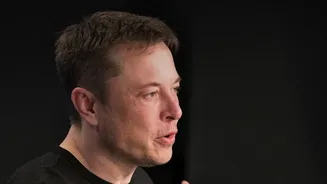
civilization-ending events. Think of a large asteroid impact, a supervolcano eruption, or irreversible climate collapse. But the risks that seem to concern Musk most are the ones of our own making. He has frequently identified threats like a declining birthrate, religious extremism, and, most famously, artificial intelligence 'going wrong' as potential dangers. Musk has argued that with all of humanity's 'eggs' in one planetary basket, a single catastrophic event could mean game over. He has stated that humanity's future will either become multiplanetary or it will end with an extinction event on Earth.
The Multi-Planetary Insurance Policy
Musk’s proposed solution is to make humanity a multi-planetary species. The core of his argument is that having a self-sustaining civilization on another world acts as a form of insurance. Recently, he clarified that this doesn't mean a colony on Mars would be immune to earthly problems like pandemics or AI threats. Instead, the sheer distance and difficulty of travel between Earth and Mars would act as a natural buffer. For example, a journey that takes roughly six months creates an 'automatic quarantine' in the event of a deadly new pandemic, giving a Martian settlement precious time to prepare or prevent its arrival. Similarly, a catastrophic cyberattack or a rogue AI unleashed on Earth would struggle to instantly bridge the vastness of space. The goal isn't to eliminate risk entirely, but to dramatically lower the odds of a single event extinguishing human consciousness forever.
Why Mars is the Destination
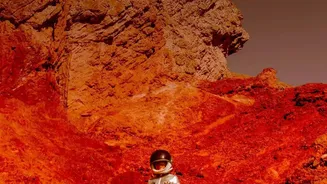
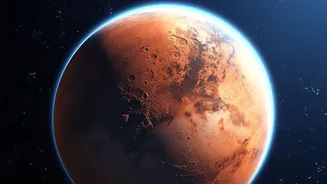
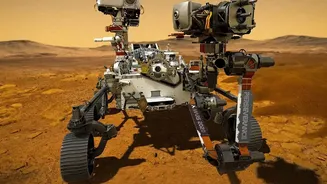
For Musk, the most viable 'second home' is Mars. While it’s far from a paradise, Mars possesses key advantages over other celestial bodies. Its day is remarkably similar to Earth’s at around 24.5 hours, it has a thin atmosphere (mostly carbon dioxide) that could potentially be used to grow plants in controlled environments, and there is frozen water at its poles and beneath its surface. Though extremely cold and with about 38% of Earth's gravity, it is seen as the most habitable long-term option besides our own planet. The long-term vision, often called terraforming—transforming Mars into an Earth-like planet—is a monumental challenge that even Musk admits would be too slow to be relevant in our lifetime. The immediate goal is more practical: establish a fully self-sustaining city, a foothold for humanity beyond Earth.
Building the 'Lifeboat': The Starship Program
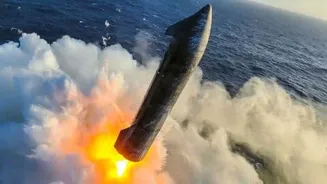
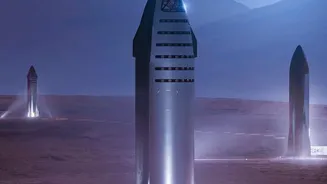
This grand vision is the primary driver behind SpaceX, Musk's aerospace company. The key to the plan is the Starship, a fully reusable transportation system designed to carry over 100 metric tonnes and up to 100 people to Mars. Reusability is the 'holy grail' that makes the economics of a Mars colony even remotely feasible, drastically cutting the cost of launching millions of tonnes of cargo and thousands of people. Musk's timeline is ambitious, with recent estimates suggesting humans could land on Mars within five to seven years. The plan involves sending initial uncrewed missions to deliver equipment and supplies, followed by the first crewed landings to begin building the infrastructure for a permanent settlement.
A Dangerous Illusion?
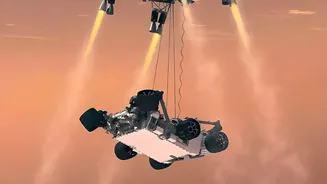
Musk's plan is not without its vocal critics. Some scientists and astrophysicists label the idea a 'dangerous illusion' or an 'escapist fantasy'. Astrophysicist Adam Becker argues that even a catastrophically damaged Earth—whether from nuclear war or climate change—would still be infinitely more habitable than Mars, which lacks breathable air and protection from cosmic radiation. The technological hurdles are immense. Of all the missions sent to land on Mars, only about 40% have succeeded, and none have carried humans. Other critics argue that the immense resources and brainpower being poured into a Mars colony could be better spent solving Earth's urgent problems, like climate change, rather than planning an escape route that would likely only be available to a select few.