


Our Quiet Galactic Neighbour
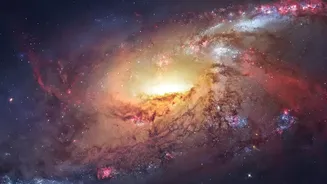
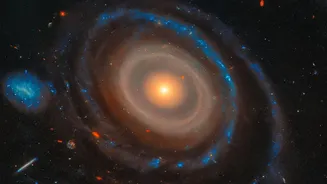
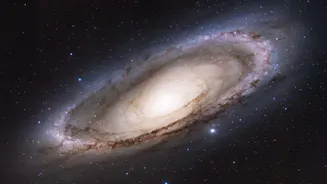
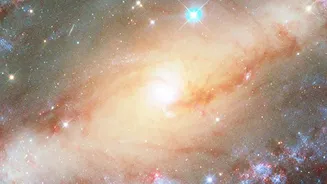
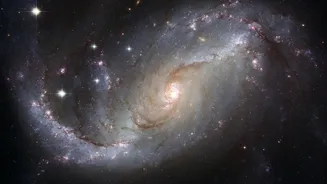
At about 2.5 million light-years away, the Andromeda galaxy is the closest major galaxy to our own Milky Way. It is a stunning spectacle, a sprawling spiral containing a trillion stars, far more than our own galaxy holds. For all its grandeur, however,
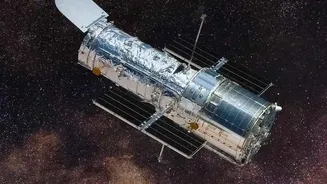
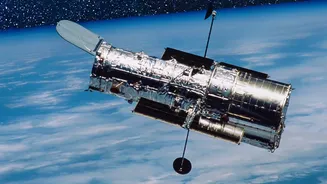
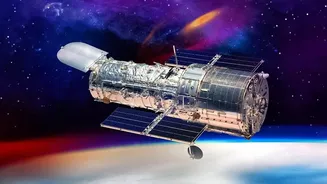
recent observations have painted a picture of a galaxy that is winding down. A major study using data from the Hubble Space Telescope confirmed in mid-2026 that star formation in Andromeda has been steadily declining for the last 500 million years. The drop has become even more pronounced in the last 40 million years, with the galaxy now creating new stars at a fraction of its former pace. Astronomers describe Andromeda as entering its 'middle age', transitioning from a vibrant hub of stellar creation to a more quiescent, almost retired state. But this present-day calm belies a chaotic and brutal history.
A History of Galactic Cannibalism
The evidence is written in the stars—specifically, in the vast, faint halo of stars that surrounds Andromeda's main disk. This halo is larger and far more complex than the Milky Way's, littered with the faint streams and trails of other, smaller galaxies. These are the leftovers from ancient cosmic feasts. Over billions of years, Andromeda’s immense gravity has captured and shredded multiple smaller galaxies, absorbing their stars and gas into its own structure. This process of galactic cannibalism is a fundamental way that large galaxies grow, but Andromeda appears to have been particularly voracious. Astronomers acting as galactic archaeologists have been able to trace these stellar remnants to reconstruct a timeline of destruction, revealing multiple feeding events over its long life.
Fueling the Star-Making Machine
These galactic mergers weren't just destructive; they were also intensely creative. When galaxies collide, the vast clouds of gas and dust within them are compressed, triggering ferocious bursts of star formation known as 'starbursts'. Studies of Andromeda's stellar populations reveal that it experienced at least two distinct eras of intense activity. One major event, happening roughly two to four billion years ago, is thought to have been triggered by a merger with another large, gas-rich galaxy. This 'wet merger' provided a massive infusion of fresh fuel, igniting a period of star birth far more prolific than anything happening in the galaxy today. It was this violent past that built much of the galaxy we see now, before it began settling into its current, quieter phase.
Reading the Galactic Scars
Uncovering this secret history is a marvel of modern astronomy. Scientists can't watch these billions-of-years-old events unfold, so they look for fossils. The stars themselves are a 'fossil record' of a galaxy's past. By using powerful instruments like the Hubble and Keck telescopes, astronomers can measure the properties of hundreds of millions of individual stars across Andromeda. Massive, young stars burn hot and blue, while smaller, older stars are cooler and redder. By mapping the ages, chemical compositions, and movements of these different stellar populations, scientists can determine when and where star formation was most active. This allows them to effectively rewind the clock and see the echoes of ancient mergers and the starbursts they ignited.
A Glimpse into Our Own Galaxy's Fate
Studying Andromeda's turbulent history isn't just about understanding our neighbour; it also provides a crucial looking glass for our own Milky Way. Our galaxy has also grown by consuming smaller ones and is on a long-term trajectory that brings it closer to Andromeda. For decades, a head-on collision in about 4.5 billion years was considered a certainty. However, more recent data from the Gaia space telescope has introduced some doubt, suggesting the grand collision might be more of a glancing blow or could be delayed, with some models now giving it a 50-50 chance of happening within the next 10 billion years. Whatever the final outcome, understanding how Andromeda's past mergers shaped its evolution helps us model the future of our own Local Group of galaxies and the ultimate fate of the Milky Way.