



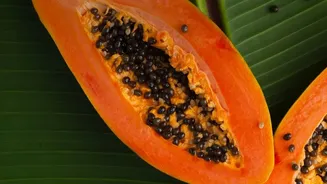
Why Monsoon Demands Extra Care
The high humidity and moisture in the air during the monsoon create the perfect breeding ground for fungi and bacteria. Fruits like papaya, which have softer skin, are particularly susceptible to spoilage and contamination. Waterlogged market conditions
and exposure to contaminated water can increase the risk of pathogens like E. coli and Salmonella. This makes it crucial to be more discerning when selecting, cleaning, and storing fruits during this season. Taking a few extra moments to inspect your papaya can save you from potential foodborne illnesses like diarrhoea and stomach infections.
The Visual Inspection: Colour and Skin
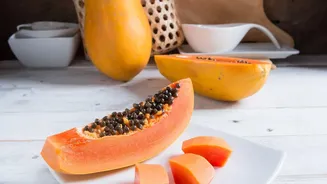
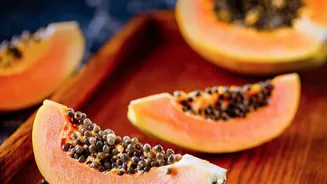
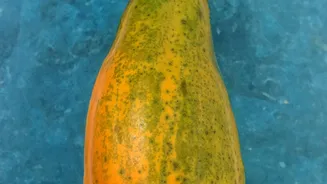
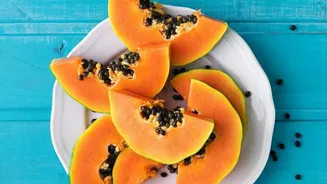
Your first check should always be visual. A ripe, healthy papaya should have skin that is turning from green to a vibrant yellow or orange-gold. Some green patches are perfectly fine, especially if you plan to eat the fruit in a day or two. What you must avoid are papayas with large, dark, sunken spots, deep bruises, or visible mould. These can be signs of fungal contamination, such as Anthracnose, which appears as brown or black spots and can compromise the flesh inside. Also, be wary of any fruit with a shrivelled or overly wrinkled appearance, as it may be old and losing its freshness.
The Touch Test: Firmness Matters
Gently press the papaya's skin with your fingertips. A perfectly ripe papaya should yield slightly to gentle pressure, similar to a ripe avocado or mango. It should feel firm overall, but not rock-hard. If the papaya is extremely hard, it is unripe and may not ripen properly if it has been harvested too early. Conversely, if your fingers sink into the fruit or you find soft, mushy spots, the papaya is overripe and likely starting to ferment or rot. This is a clear sign to put it back, as these soft areas are entry points for bacteria.
The Smell Test: A Sweet Aroma
Don't be shy about smelling the fruit, particularly at the stem end. A ripe papaya will have a faint, sweet, and pleasant tropical fragrance. This is a reliable indicator of its flavour and readiness to eat. If you detect no smell at all, the fruit is likely still unripe. However, a strong, fermented, or sour odour is a major red flag. This unpleasant smell indicates that the fruit is overripe and has begun to spoil, making it unsafe for consumption.
Handling and Storing at Home
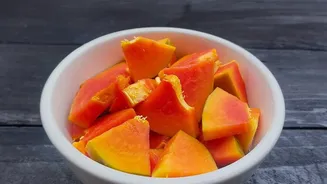
Once you've chosen a good papaya, your job isn't done. Proper handling at home is critical, especially during the monsoon. Before cutting, wash the entire fruit thoroughly under clean, running water. This prevents any surface contaminants from being transferred by the knife to the flesh inside. If you bought a slightly green papaya, you can leave it at room temperature for a couple of days to ripen. Once ripe or cut, papaya should be stored in an airtight container in the refrigerator and consumed within two to three days to maintain its freshness and safety. Never leave cut fruit out at room temperature for extended periods, as this encourages rapid bacterial growth.