






The Spirit of Sawan
The month of Sawan, also known as Shravan, is one of the most auspicious periods in the Hindu calendar, dedicated to the worship of Lord Shiva. In 2026, for most of North India following the Purnimanta calendar, Sawan will be observed from July 30 to August
28. The entire month is charged with spiritual significance, stemming from the mythological tale of the Samudra Manthan, or the churning of the cosmic ocean. During this event, a deadly poison called Halahala emerged, threatening all of creation. Lord Shiva, in an act of ultimate compassion, consumed the poison to save the universe. The poison turned his throat blue, earning him the name Neelkanth (the blue-throated one). Devotees believe this sacrifice occurred during Sawan, and they observe fasts and offer prayers to express their gratitude and seek his blessings.
The Rules of a Fasting Feast
Fasting during Sawan, especially on the Mondays (Somvars), is a common practice. This involves adhering to a Sattvic diet, which is pure, light, and calming for the mind and body. The rules require abstaining from regular grains like wheat and rice, all lentils and pulses, and common ingredients like onion, garlic, and regular table salt. Spices such as turmeric and garam masala are also typically avoided. Instead, the vrat (fasting) pantry is filled with an array of permissible alternatives. Fruits, milk and dairy products, dry fruits, and peanuts are all allowed. The diet relies on specific 'vrat-friendly' flours like Kuttu (buckwheat), Singhara (water chestnut), and Rajgira (amaranth). For seasoning, Sendha Namak (rock salt) is used exclusively.
The Unlikely Hero: Potato
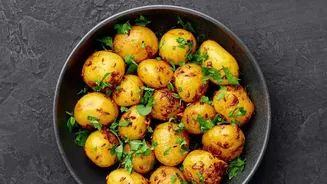
Among the staples of fasting cuisine, the potato, or aloo, stands out as a true hero. Though a humble tuber, it is a powerhouse of carbohydrates, providing sustained energy that is crucial during a fast. Since it is not a grain, it is widely permitted across various Hindu fasting traditions, including Sawan, Navratri, and Ekadashi. Its versatility is its greatest strength. It can be boiled, sautéed, or mashed to create a variety of savoury dishes and even sweets. Its ability to be cooked simply with rock salt and minimal spices makes it an ideal food for maintaining the purity of a Sattvic diet while ensuring one doesn't feel deprived of fulfilling food.
A Guide to Perfect Aloo Halwa
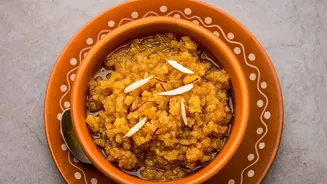
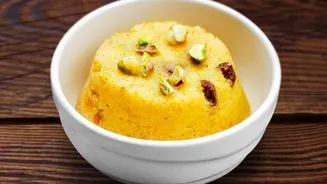
This brings us to one of the most comforting and decadent vrat-friendly desserts: Aloo Halwa. This warm, sweet dish made from potatoes is a specialty in many households, particularly in Uttar Pradesh, during festive seasons. It transforms the simple potato into a rich, ghee-laden dessert that feels both indulgent and spiritually appropriate. The texture is smooth and velvety, melting in your mouth with every spoonful. Making it is simpler than you might think and requires just a few basic ingredients that are all permissible during the Sawan fast. Below is a simple guide to creating this wonderful dessert in your own kitchen.
Ingredients You'll Need
• 4-5 medium-sized potatoes (about 500g)
• 4 tablespoons of desi ghee (clarified butter)
• 1/2 cup sugar (adjust to your taste)
• 1/2 teaspoon cardamom powder
• A pinch of saffron strands, soaked in 2 tablespoons of warm milk (optional)
• 2 tablespoons of chopped nuts (almonds, pistachios) for garnish
Step-by-Step Method
1. Begin by boiling the potatoes until they are completely tender. Once they have cooled down enough to handle, peel the skin off.
2. For the best texture, grate the boiled potatoes. This is the secret to a smooth, lump-free halwa.
3. Heat the ghee in a heavy-bottomed pan or kadai over a medium flame. Once the ghee is hot, add the grated potatoes.
4. Sauté the potatoes, stirring continuously, for about 10-12 minutes. You need to cook them until they lose their moisture, turn a light golden brown, and start releasing a fragrant aroma. The mixture will begin to pull away from the sides of the pan.
5. Add the sugar and continue to stir. As the sugar melts, the mixture will become slightly loose and liquid-like. Keep cooking and stirring until the halwa thickens again.
6. Now, pour in the saffron-infused milk (if using) and mix well. Add the cardamom powder and continue to cook for another couple of minutes until the halwa comes together as a single mass.
7. Turn off the heat. Transfer the warm halwa to a serving bowl, garnish with chopped nuts, and serve immediately.