







Start with a Gentle Foundation
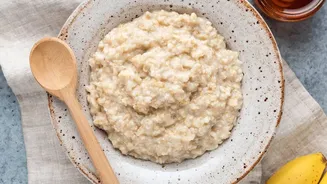
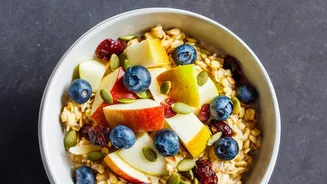
The base of your breakfast bowl sets the tone for digestion. While many grains are healthy, some can be harder to break down. Oats are a fantastic choice because they are rich in soluble fibre, which dissolves in water to form a gel-like substance that
can aid digestion. If you have a sensitive system, consider cooking your oats thoroughly or preparing overnight oats. Soaking them helps break down phytic acid, making them even easier on the gut. For a grain-free option, a base of lactose-free Greek yoghurt or kefir can provide a creamy, protein-packed start. Sprouted grains, found in some cereals, are also easier for some people to digest.
Fibre Is a Friend, but Choose Wisely
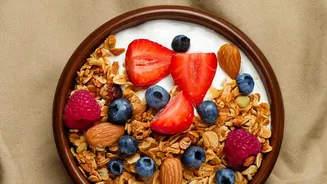
Fibre is essential for a healthy gut, but the type matters. There are two kinds: soluble and insoluble. Soluble fibre, found in oats, chia seeds, bananas, and berries, slows digestion, which can help with nutrient absorption and diarrhoea. Insoluble fibre, found in bran, nuts, and many whole grains, adds bulk to stool and can help with constipation. However, a large amount of insoluble fibre first thing in the morning can be too intense for some, causing gas and bloating. A balanced approach is best. A tablespoon of chia seeds or ground flaxseed adds a gentle mix of both fibres. Berries like raspberries and blueberries are also excellent sources of prebiotic fibre, which feeds the good bacteria in your gut.
Power Up with Probiotics
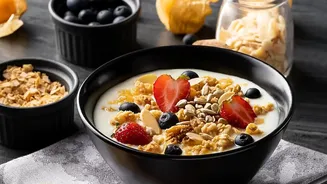
Probiotics are live beneficial bacteria that support a healthy gut microbiome. Incorporating them into your breakfast bowl is a simple way to boost your digestive health. Plain, unsweetened yoghurt and kefir are two of the best sources. Look for labels that say 'live and active cultures'. For a savoury twist, a small amount of kimchi or sauerkraut can be added to an egg-based breakfast bowl, offering a tangy flavour and a dose of probiotics. Even certain cheeses, like cheddar or mozzarella, contain some probiotics. Starting your day with these foods helps replenish the good bacteria that are crucial for smooth digestion.
Incorporate Healthy Fats and Proteins
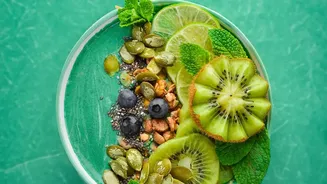
To create a balanced bowl that keeps you full and your blood sugar stable, don't forget protein and healthy fats. Nuts and seeds like almonds, walnuts, and pumpkin seeds provide healthy fats, fibre, and protein. A spoonful of nut butter can also add creaminess and flavour. For those who prefer a savoury bowl, eggs are an easily digestible protein source. Combining them with avocado provides both healthy monounsaturated fats and prebiotic fibre. This combination of fat and protein slows down the absorption of carbohydrates, preventing a rapid spike and crash in blood sugar that can sometimes contribute to digestive unease.
Ingredients to Approach with Caution
Some seemingly healthy foods can be common triggers for digestive distress. For individuals with sensitive systems, particularly those following a low-FODMAP diet, certain fruits like apples and pears can cause bloating. Dried fruits are also a concentrated source of sugar and sulphites, which can irritate the gut. Flavoured yoghurts are often packed with added sugars or artificial sweeteners that can disrupt gut function. Finally, while raw cruciferous vegetables like kale are nutritious, they can be tough to digest in large quantities in the morning; lightly steaming or sautéing them first can make a big difference.