




The Founders' Leap of Faith
Pawan Kumar Chandana and Naga Bharath Daka were not your typical startup founders. Both were accomplished scientists at the Indian Space Research Organisation (ISRO), working on some of the nation's most prestigious projects. Chandana was a key part of the team
for the GSLV Mk III, India's heaviest launch vehicle, while Daka was a flight computer engineer designing the literal brains of rockets. Yet, in 2018, they shared a vision that extended beyond their secure government careers. They saw a future where space was not just the domain of national agencies but an open frontier for private enterprise. Inspired by the commercial space revolution in the West, they decided to take an immense risk, resigning from ISRO to create their own launch company in Hyderabad.
An Ambitious Plan on Paper
The mission of Skyroot Aerospace was as simple as it was audacious: to open space for all by making satellite launches affordable, reliable, and available on demand. Their flagship project was the Vikram series of rockets, named in honour of Dr. Vikram Sarabhai, the father of India's space program. The first orbital-class vehicle, Vikram-1, was designed to be a game-changer. Built with an all-carbon-fibre structure, it was significantly lighter than traditional rockets and featured advanced, 3D-printed engines. This innovative approach promised to drastically cut down manufacturing time and costs, solving a major bottleneck in the global small satellite launch market. The plan was brilliant, the engineering was sound, but turning these complex blueprints into a seven-storey-tall, flight-ready vehicle required something they didn't have: money.
The Cheque That Ignited the Engines
In the early days, raising capital for a space-tech venture in India was a monumental challenge. The industry was unproven, and the idea of competing with established global players seemed far-fetched to many investors. Building hardware is expensive, and rocket hardware is in a league of its own. While the exact details of the initial funding are part of the company's foundational lore, the headline-making ₹10 crore cheque from early backers, including the founders of Greenko Group, was a critical turning point. It wasn't just money; it was validation. This initial seed capital was the fuel that allowed Skyroot to move from the drawing board to the workshop. It enabled them to build their first hardware prototypes, conduct initial engine tests, and expand their small team of passionate engineers. This early belief was instrumental in creating the physical assets and demonstrating the technical progress needed to attract larger, institutional investors down the line.
Building on Belief
That first major injection of funds created a ripple effect. Skyroot successfully built and launched Vikram-S in November 2022, a suborbital rocket that became the first privately built rocket to reach space from India. This successful test mission, named 'Prarambh' (The Beginning), proved their technology worked and that their team could deliver. The demonstration of tangible progress opened the floodgates for more significant investment. In 2022, the company raised $51 million in a Series B round led by GIC, a global investment firm, which was the largest ever in India's private space sector at the time. Subsequent funding rounds followed, with investments from major players like BlackRock and Sherpalo Ventures, eventually pushing Skyroot’s valuation past $1.1 billion and making it India's first space-tech unicorn in 2026.
Vikram-1 Reaches for the Stars
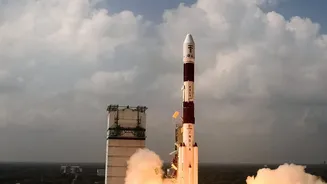
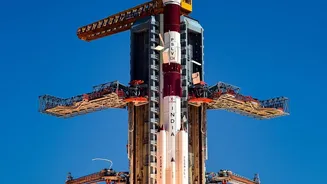
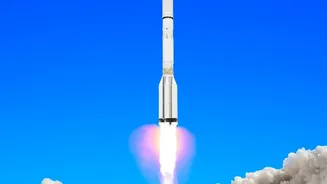
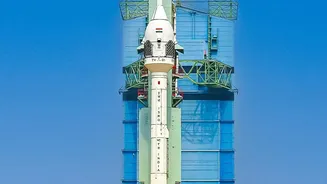
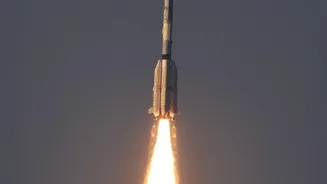
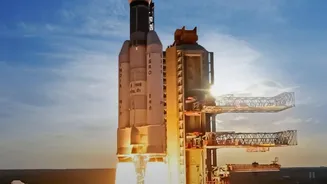
The culmination of this journey came in July 2026, when the fully-stacked Vikram-1 rocket stood on the launchpad at Sriharikota, ready for its maiden orbital flight. This mission, 'Aagaman' (The Arrival), was the ultimate test. The successful launch made India only the third country, after the U.S. and China, to have a private company achieve orbital launch capability. What started as a plan on paper, fueled by a crucial ₹10 crore cheque, had become a national milestone. It represented a new era for India's space economy, where private innovation, backed by strategic investment and enabled by government policy reforms, could achieve what was once thought impossible. Skyroot's success has not only paved its own path but has also illuminated the way for hundreds of other space startups in the country, boosting investor confidence in a sector poised for exponential growth.