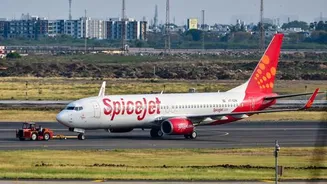




A Wave of Cancellations
The scale of disruption has been staggering. On November 19 alone, SpiceJet cancelled 31 of its 42 scheduled flights across the major hubs of Delhi, Mumbai, and Bengaluru — nearly 74% of its services at these airports. This follows hundreds of cancellations
earlier in the month, leaving passengers frustrated and often uninformed until they reached the airport. The problem became so acute that Delhi International Airport Limited (DIAL) had to issue advisories warning passengers about potential disruptions. This operational chaos is the most direct way passengers are feeling the heat from the airline's internal struggles.
The Financial Nosedive
At the heart of SpiceJet's problems is a severe and persistent cash crunch. The airline has been grappling with mounting debts, unpaid dues to service providers, and salary delays for its staff. Its financial woes are not new, with the company accumulating losses of approximately ₹5,950 crore between FY19 and FY24. This financial instability has drastically shrunk its presence in the Indian skies. The airline's domestic market share plummeted from 3.9% in January 2026 to just 0.6% by September, carrying only 73,000 passengers compared to nearly 600,000 at the start of the year. The majority of its aircraft fleet is now grounded, with some reports suggesting as few as 10-13 planes are operational.
How a Cash Crunch Grounds a Fleet
For an airline, cash is like fuel. Without a steady flow, the entire operation seizes up. SpiceJet's inability to pay its bills on time has had a domino effect. Unpaid dues to aircraft lessors have led to legal disputes and the grounding of planes. Debts to ground-handling companies, such as Dnata in Dubai, resulted in a temporary suspension of services there over unpaid dues. Crucially, a lack of funds also impacts maintenance, the availability of spare parts, and the ability to pay for aviation turbine fuel, all of which are non-negotiable for safe and reliable flight operations. Furthermore, delayed salaries have affected employee morale, with pilots recently raising safety concerns linked to the financial stress.
Regulator Steps In
The widespread disruptions have not gone unnoticed. The Directorate General of Civil Aviation (DGCA) has issued a show-cause notice to SpiceJet, demanding an explanation within seven days for its deteriorating performance. The notice, dated November 17, highlights the grounded fleet, failure to operate approved schedules, inadequate passenger facilitation, and even unpaid penalties from previous violations. The regulator has pointed out that the airline has failed to provide a credible plan to bring its grounded aircraft back into service, a critical step for operational recovery.
A High-Stakes Fundraising Plan
In a bid to pull itself back from the brink, SpiceJet's board has approved a proposal to raise up to ₹5,500 crore. Chairman and Managing Director Ajay Singh stated the funds would be used to strengthen the balance sheet, rebuild the fleet, and restore operations. However, this is not a done deal. The plan is an approval to seek funds, not a confirmation of investment. The airline is also facing a December 7 deadline from the Bombay Stock Exchange (BSE) to file overdue financial results, failing which trading in its shares could be suspended. This fundraising effort is a critical, perhaps final, attempt to secure the capital needed to stabilise the airline and win back the trust of both passengers and investors.