


1. Rani ki Vav, Gujarat
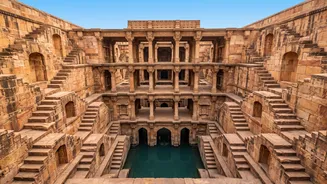
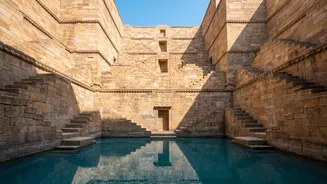
A UNESCO World Heritage Site, Rani ki Vav in Patan is not merely a stepwell but an inverted temple dedicated to water. Built in the 11th century by Queen Udayamati in memory of her husband, King Bhimdev I, its seven levels are adorned with over 500 principal
sculptures and a thousand minor ones. The intricate carvings depict deities, celestial beings, and scenes from daily life, showcasing the peak of Maru-Gurjara architecture. After being silted over by the Saraswati river, it was excavated by the Archaeological Survey of India in the 1980s, revealing its pristine condition.
2. Chand Baori, Rajasthan
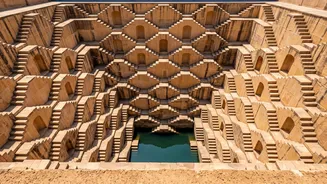
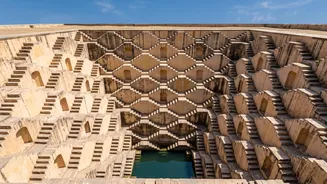
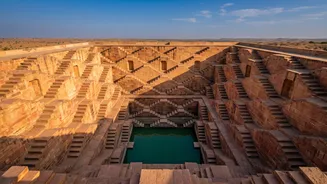
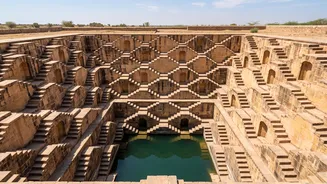
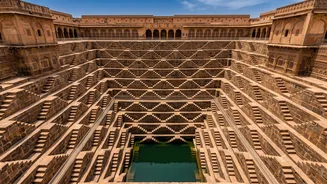
Located in the village of Abhaneri, Chand Baori is one of the deepest and most visually striking stepwells in the world. Constructed between the 8th and 9th centuries by King Chanda, it plunges 13 stories and nearly 100 feet into the earth. Its defining feature is the 3,500 narrow, perfectly symmetrical steps that form a dizzying geometric maze on three sides. The fourth side features a multi-storeyed pavilion with carved windows and galleries for royals to enjoy the cool air at the bottom.
3. Adalaj ni Vav, Gujarat
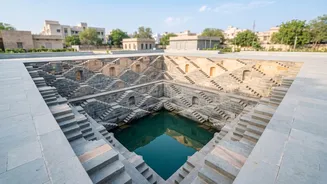
This five-storey stepwell near Ahmedabad is a beautiful example of Indo-Islamic architectural fusion. Its history is a tragic tale of love and sacrifice. Started by Hindu ruler Rana Veer Singh in 1498, it was completed by Muslim Sultan Mahmud Begada, who conquered the kingdom and fell in love with the widowed Queen Rudabai. She agreed to marry him on the condition that he finish her husband's work. Upon its completion, she ended her life by jumping into the well. The walls are adorned with carvings of deities, dancers, and geometric patterns.
4. Agrasen ki Baoli, Delhi
Tucked away amidst the high-rises of central Delhi, Agrasen ki Baoli is a protected historical monument that offers a quiet escape. This 60-meter long and 15-meter wide stepwell consists of 108 steps descending into the depths. While its exact origins are debated, legend attributes its construction to the ancient king Agrasen. Historians believe the current structure was likely rebuilt during the Tughlaq or Lodi dynasty in the 14th century. It once served as a vital water source and a social gathering spot for the city.
5. Panna Meena ka Kund, Rajasthan
Situated near Amer Fort in Jaipur, this 16th-century stepwell is a hidden gem known for its unique crisscrossing staircases. The symmetrical, geometric steps were designed not just for beauty but also as a community space where people, especially women, would gather to collect water, socialise, and rest in its cool environs. The square-shaped structure has octagonal kiosks at its corners and presents a stunning optical illusion, making it a favorite spot for photographers.
6. Toorji Ka Jhalra, Jodhpur
Once neglected and filled with debris, Toorji Ka Jhalra in Jodhpur is a testament to successful urban regeneration. Built in the 1740s by the queen of Maharaja Abhay Singh, this red sandstone stepwell was recently restored and is now a bustling hub. Descending over 200 feet, it features intricate carvings of dancing elephants, lions, and water spouts. The area around the stepwell, now known as Step Well Square, is a lively space with cafes and shops, making the historical site a vibrant part of modern city life.
7. Surya Kund, Modhera
Part of the magnificent Sun Temple complex in Modhera, Gujarat, the Surya Kund is a large rectangular stepwell built in the 11th century. It was used for ceremonial purification before worship. The tank is famous for its geometric precision and the 108 miniature shrines carved into its steps, dedicated to various deities like Ganesha and Vishnu. The intricate pattern of steps descending to the water creates a stunning visual spectacle, reflecting the architectural genius of the Solanki dynasty.
8. Pushkarani at Hampi, Karnataka
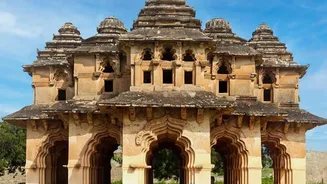
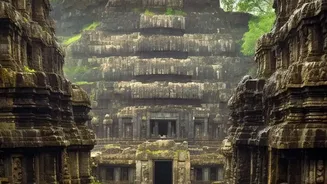
Moving south to the ruins of the Vijayanagara Empire, the Pushkaranis, or sacred temple tanks, showcase a distinct style. The stepped tank within the Royal Enclosure at Hampi is a beautiful example, built with finely finished granite blocks in a pyramidal arrangement. These tanks were not just for water storage but were integral to temple rituals and festivals. Water was supplied through an ingenious network of stone aqueducts, highlighting the advanced hydraulic engineering of the era.