
Inside SMOPS-2026
The International Conference on Spacecraft Mission Operations (SMOPS) is a major event where global space agencies, industry leaders, and researchers gather to map out the future of space exploration. Held in Bengaluru, the 2026 edition focused heavily
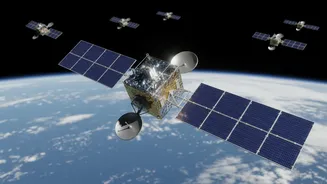
on innovative and sustainable mission management, with a recurring theme: the essential role of Artificial Intelligence and Machine Learning. Organized by ISRO, the event underscored how AI is becoming critical not just for ambitious projects like interplanetary missions, but for the day-to-day business of operating in orbit. Discussions revolved around managing large satellite constellations, handling increasing space traffic, and enhancing mission efficiency through smart, autonomous systems.
Why Automate the Routine?
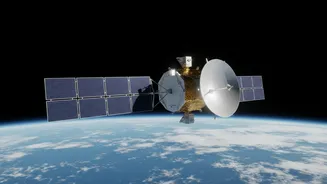
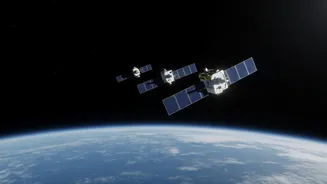
Low Earth Orbit is becoming incredibly crowded. With tens of thousands of satellites and pieces of debris, the risk of collision is a constant threat. For a single satellite, let alone a constellation of hundreds, human operators cannot manually track every potential threat or manage every system diagnostic in real-time. This is where AI excels. It can process vast amounts of telemetry data to predict equipment failures, optimize a satellite's power consumption, and most importantly, perform constant collision avoidance manoeuvres. Automating these routine tasks frees up human controllers to focus on higher-level strategic decisions, making space operations both safer and more efficient.
The AI Decision-Making Process
So, what does an AI-led decision in orbit look like? It's less about a sentient computer taking over and more about sophisticated algorithms at work. For example, an AI system can monitor a satellite's trajectory and cross-reference it with the known paths of debris and other spacecraft. If it calculates a high probability of a future collision, it can automatically plot an optimal avoidance manoeuvre that uses the least amount of fuel. Similarly, AI can manage a constellation's communication bandwidth, redirecting capacity to areas with high demand, such as a disaster zone or a region with major events, all without waiting for commands from Earth. This rapid, autonomous response is something ground-based human teams simply cannot match due to communication delays.
India's Strategic Push
For India, embracing AI in space is a strategic imperative. ISRO has been actively developing AI and ML solutions for spacecraft operations, big data analytics, and space traffic management. This isn't just about technological advancement; it's about securing national interests. As space becomes a more contested domain, the ability to operate satellites with greater autonomy and resilience is crucial for defence and surveillance. The Defence Space Agency (DSA) is tasked with operating India's space warfare and satellite intelligence assets, and AI-driven capabilities provide a significant edge. By automating routine functions, India ensures its critical space infrastructure is less vulnerable and more responsive, maintaining a strategic high ground in an increasingly complex geopolitical environment.
The Human in the Loop
The focus on AI doesn't mean human operators are becoming obsolete. The current model is one of "human-machine synergy." Many critical systems still operate with a "human in the loop," where the AI recommends a course of action—like an orbital adjustment—but a ground controller gives the final approval. This approach balances the speed and data-processing power of AI with human experience and oversight. As these systems prove their reliability, we will likely see a gradual shift to more autonomous operations, but always within clear limits and rules set by their human designers. The goal is to create a trustworthy autonomous partner that enhances, rather than replaces, human capability.