




What is NavIC?
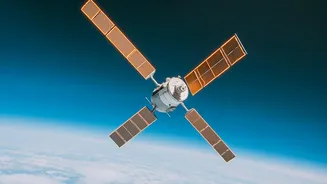
NavIC, which stands for Navigation with Indian Constellation, is India’s independent regional navigation satellite system. Developed by the Indian Space Research Organisation (ISRO), it is designed to provide accurate real-time positioning and timing
services. Unlike global systems like the USA's GPS, NavIC is focused specifically on India and a region extending 1,500 kilometres around its mainland. This regional focus allows it to offer superior accuracy on home turf. The system serves two main purposes: a Standard Positioning Service (SPS) for all civilian users and an encrypted Restricted Service (RS) for strategic uses by the military and security agencies. The goal is to reduce India's dependence on foreign navigation systems, a lesson learned during the 1999 Kargil War when access to foreign satellite data was not guaranteed.
A Constellation in Need of Repair
To provide a precise location, a navigation system requires a minimum of four functional satellites. The original NavIC constellation, built with IRNSS-1 series satellites, has faced significant challenges. Several of the first-generation satellites suffered from the failure of their on-board atomic clocks, which are essential for the hyper-accurate timekeeping needed to calculate a position. Some satellites have also reached the end of their 10-year mission life. These issues degraded the constellation's strength to the point where, as of recently, only three satellites were fully functional for providing positioning services. This shortfall meant NavIC could not operate as a standalone navigation service, impacting its utility for critical strategic and civilian applications.
Enter the NVS-03 Satellite
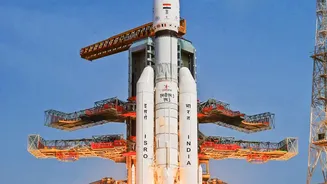
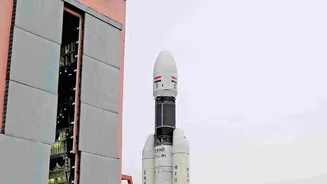
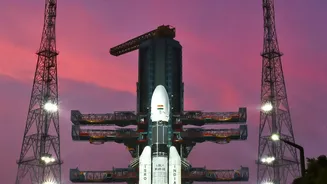
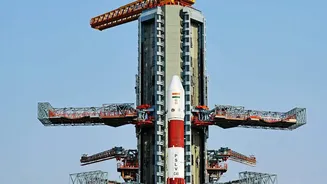
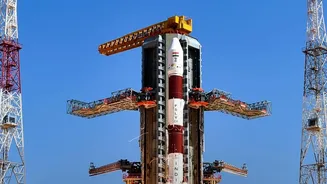
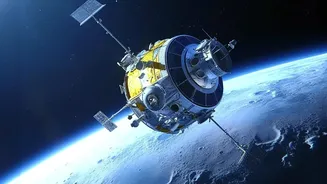
ISRO is now in the process of launching its second generation of navigation satellites, the NVS series, to replenish and upgrade the constellation. The upcoming launch of NVS-03, targeted for mid-October 2026, is a pivotal moment in this effort. This mission follows the successful launch of NVS-01 in 2023 and an unsuccessful attempt with NVS-02 in early 2025. The NVS series satellites are more advanced, with a planned mission life of 12 years and improved technology. Crucially, they carry indigenously developed rubidium atomic clocks, designed to be more reliable than the imported ones that failed on earlier satellites. They also transmit on the L1 frequency band, which is widely used by civilian GPS, enhancing NavIC's interoperability with consumer devices like smartphones and wearables.
Restoring Full Navigational Power
The successful launch and commissioning of NVS-03 would be a game-changer. It would increase the number of operational satellites from three to the minimum required four, officially restoring NavIC's standalone positioning service. This means the system will once again be able to independently calculate a user's location without relying on other global navigation systems. This is particularly vital for India's security forces, who depend on a secure, uncompromised, and autonomous system for navigating missiles, warships, aircraft, and troop movements. Restoring the constellation ensures that India maintains strategic autonomy and is not vulnerable to foreign-controlled networks being denied or degraded during a conflict.
Why a Fully Functional NavIC Matters
Beyond its military importance, a robust NavIC system has far-reaching benefits for the nation. It promises more accurate and reliable navigation for transportation, from commercial shipping and aviation to everyday vehicle tracking. In disaster management, it can provide precise location data to guide rescue and relief operations, even in remote areas where other signals might be weak. It also supports key economic sectors like precision agriculture, telecommunications network synchronization, and infrastructure development. With the new L1 band compatibility, a full-strength NavIC is better positioned for mass-market adoption, potentially becoming a standard feature in smartphones sold across India and giving citizens access to a more accurate navigation service tailored for the Indian region.