


A Planet of Extremes
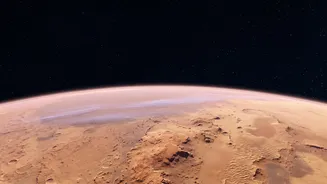
Before we can even think about footprints, we have to contend with the forecast. Mars is a world of violent weather. Its atmosphere, less than 1% as dense as Earth's, offers little protection. This leads to dramatic temperature swings, with a single day
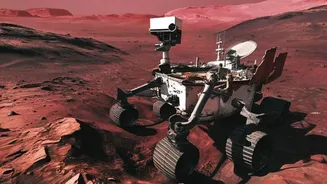
seeing drops of over 55 degrees Celsius between afternoon and night. But the bigger threats are the dust storms. These aren't just small squalls; they can grow into planet-encircling events that blot out the sun for weeks. For a solar-powered rover, this is a death sentence, as the Opportunity rover discovered in 2018 when a global dust storm cut its power and ended its mission. Understanding the timing and severity of these seasonal storms is the first line of defense for any hardware sent to the surface.
The Mysterious Case of Vanishing Frost
One of the most fascinating and critical areas of Martian climate science involves something we have on Earth, but with a dangerous twist: frost. On Mars, this frost isn't made of water, but carbon dioxide—essentially, dry ice. It forms overnight in many regions, but when the morning sun hits it, it doesn’t melt into a liquid. Instead, it sublimates, turning instantly from a solid into a gas. For years, scientists were puzzled when infrared cameras on orbiters like Mars Odyssey detected large areas of cold frost that were invisible to regular cameras. The solution was the discovery of “dirty frost,” a thin layer of CO2 ice camouflaged by dust particles. This seemingly minor detail turned out to be the key to understanding a much larger threat.
When a Sunbeam Triggers an Avalanche
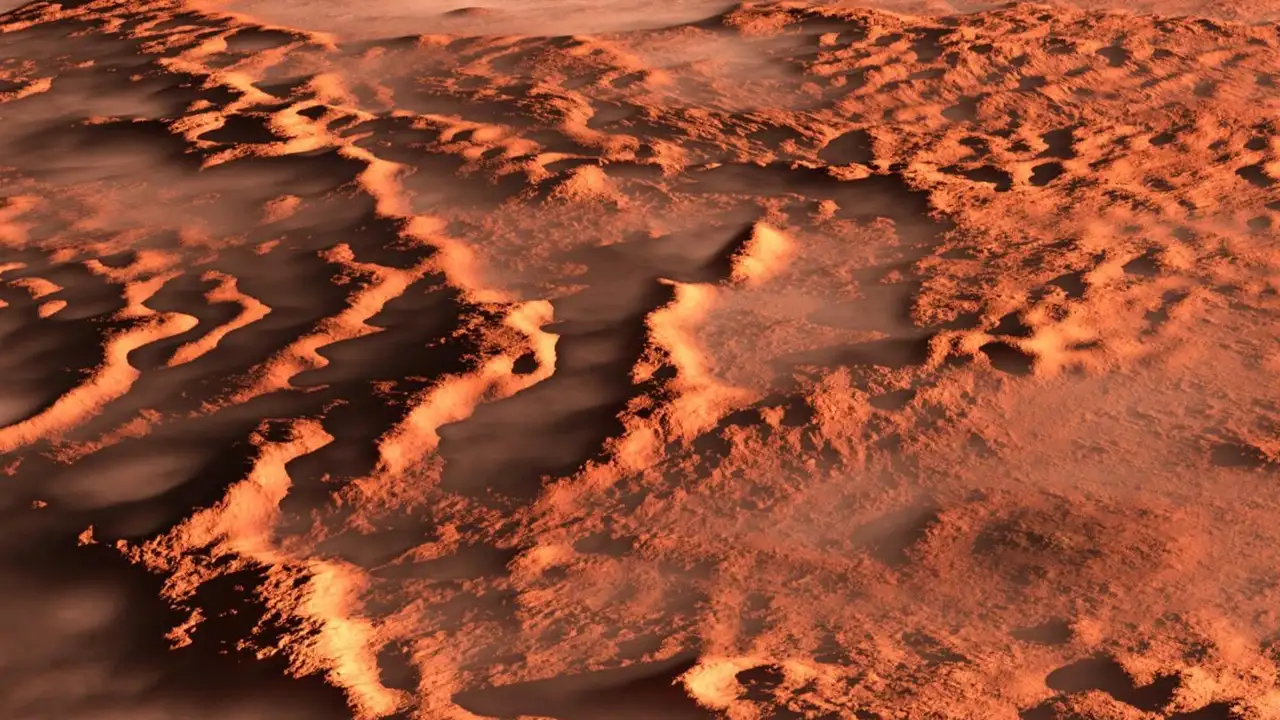
The explosive sublimation of this CO2 frost is a powerful force. As the gas erupts from beneath the dusty surface, it destabilizes the ground, triggering massive dust avalanches down slopes and crater walls. Using the high-resolution HiRISE camera on the Mars Reconnaissance Orbiter, scientists have captured these avalanches in the act—towering clouds of dust and debris cascading downwards. These events, known as “slope streaks,” fundamentally reshape the Martian landscape. What looks like a stable, serene mountainside from orbit could be an active avalanche zone. This knowledge is crucial because a landing site that seems ideal could be in the direct path of a predictable, seasonal landslide, posing an unacceptable risk to a multi-billion-dollar rover or, one day, a human habitat.
From Climate Data to Mission Blueprints
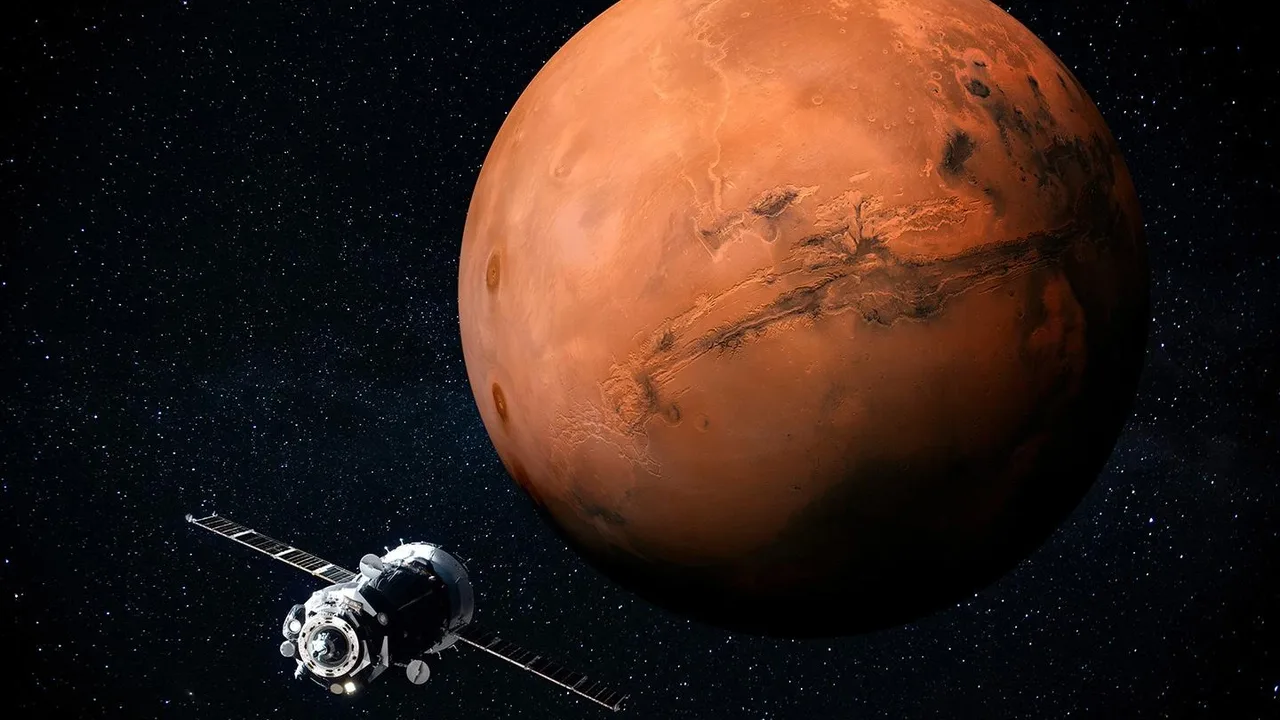
This is where climate studies become indispensable for mission planning. The data gathered by orbiters and rovers feeds into sophisticated climate models that act as a weather forecast for Mars. By understanding where and when CO2 frost is likely to cause avalanches, mission planners can steer landers away from high-risk slopes. By predicting the seasonal onset of dust storms, controllers can budget power for rovers, command them to seek shelter, or schedule high-energy activities for clearer months. Even the act of landing itself, a terrifying plunge through a thin atmosphere, relies on precise atmospheric density models to work. This climate data is not just academic; it is a practical toolkit for survival.
Charting a Course for Human Explorers
While these studies are currently safeguarding our robotic explorers, their most important application is for the future. The challenges faced by rovers are magnified for human missions. Radiation, extreme cold, and the thin atmosphere are all life-threatening variables that are directly tied to Martian weather. A dust storm that drains a rover’s battery could compromise the life support systems of a human outpost. An ill-timed solar flare, tracked by atmospheric studies, could deliver a dangerous dose of radiation to astronauts on a surface expedition. The climate models being refined today will inform the design of habitats, the scheduling of outdoor activities, and the selection of the first human settlements. They are the foundation upon which a sustainable human presence on another world will be built.