







A Major Investment in the Lunar Economy
In a significant move to bolster its long-term lunar exploration plans, NASA has awarded nearly $600 million in new contracts to three American companies. The funding, announced on June 30, 2026, tasks Astrobotic Technology, Firefly Aerospace, and Intuitive
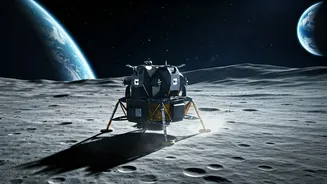
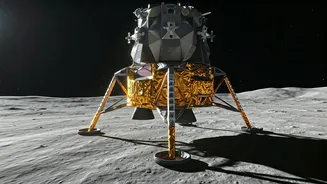
Machines with delivering a host of scientific instruments, research gear, and technology demonstrations to the Moon. These uncrewed missions are slated to land in late 2028 and are a cornerstone of NASA's Commercial Lunar Payload Services (CLPS) initiative. This program is designed to foster a commercial space economy by having NASA act as a customer, purchasing transport services from private industry rather than owning and operating the landers itself. Astrobotic received the largest share, with $297.9 million for two missions, while Firefly Aerospace and Intuitive Machines were awarded $144.2 million and $148.3 million respectively for one mission each.
Delivering the Goods: Cargo and Landers
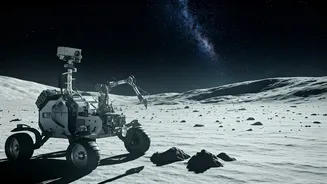
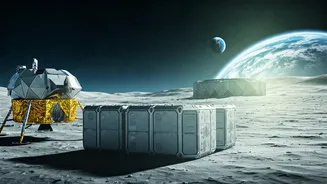
The core of this funding is about creating a reliable delivery service to the lunar surface. By awarding contracts for four separate landings, NASA is accelerating its mission cadence, which allows for faster learning and iteration. This approach aims to prove that repeated, safe landings are possible before more complex and expensive hardware—and eventually astronauts—are sent. The three companies will use updated versions of lander designs that have already flown, a strategy intended to increase reliability and speed up production. This steady stream of cargo deliveries is fundamental to NASA's Moon Base initiative, which envisions a sustained human presence on the Moon. These robotic missions serve as robotic trailblazers, setting up the infrastructure and gathering crucial data needed for long-term human habitation.
New Eyes and Tools for Science
The landers won't be arriving empty-handed. Each will carry a suite of advanced sensors and research equipment designed to operate on the lunar surface. A key payload on all four missions will be the Stereo Camera for Lunar Plume Surface Studies (SCALPSS). This array of cameras will create 3D models of how a lander's engine exhaust interacts with the fine lunar dust, or regolith. Understanding these plume effects is critical for ensuring that future, larger landers don't damage nearby equipment or habitats when they touch down. The missions will also deploy laser retroreflectors, which are small, passive devices that act as permanent location markers on the Moon. By bouncing lasers off these reflectors, future missions can navigate with extreme precision. The data from these instruments will inform the design of everything from future spacecraft to astronaut habitats.
A Strategic Shift for NASA
This wave of funding highlights a crucial strategic pivot for the space agency. The CLPS initiative represents a move away from the traditional model where NASA designed, built, and operated all its own hardware. Instead, by stimulating the commercial marketplace, NASA can leverage private sector innovation, drive down costs, and focus its own resources on the larger exploration architecture of the Artemis program. This public-private partnership model is designed to create a robust and self-sustaining lunar economy where NASA is just one of many customers. Officials have noted that this approach empowers American industry to become active partners in NASA's ambitious goals for the Moon and, eventually, Mars. It also allows the agency to test and refine the technologies and operational expertise needed before sending humans back to the lunar surface for extended stays.