

Meet the Cosmic Cartographer
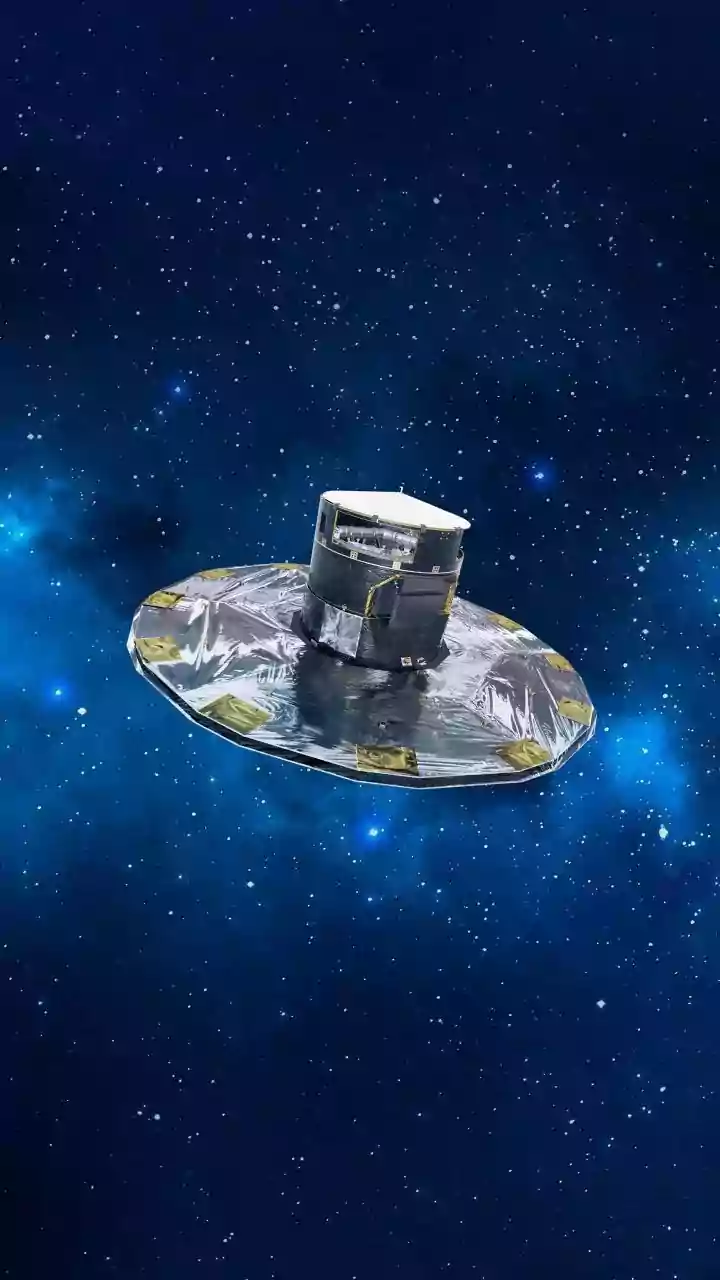
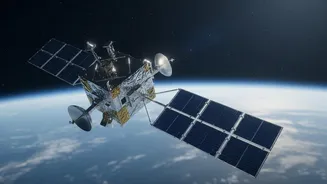
Launched in September 2025, NASA's Interstellar Mapping and Acceleration Probe, or IMAP, is a state-of-the-art observatory on a crucial mission. From its vantage point one million miles from Earth, it has begun a two-year quest to map the invisible edges
of our solar system. The mission officially began its science phase in February 2026, and on August 7, 2026, NASA made the first trove of data from seven of its ten instruments available to the public. IMAP isn't just one tool; it’s a suite of sophisticated sensors, each designed to capture a different piece of the puzzle, from magnetic fields to interstellar dust. Together, they will create the first-ever comprehensive 3D map of our home in the galaxy.
The Solar System's Protective Bubble
The boundary IMAP is studying is called the heliosphere. Think of it as a massive bubble inflated by the solar wind, a constant stream of charged particles flowing from the Sun. This bubble extends far beyond the planets, carving out a safe harbor in the interstellar medium. Its most important job is to act as a shield, deflecting a significant amount of dangerous galactic cosmic rays—high-energy particles from distant supernovae—that would otherwise bombard our solar system. This protection is a key reason why life could flourish on Earth. Until now, our only direct measurements from this region came from the twin Voyager spacecraft, which took decades to travel the billions of miles needed to cross the heliosphere's edge, known as the heliopause.
First Glimpses from the Frontier
The newly released data offers a powerful preview of what's to come. Instruments like the Solar Wind Electron (SWE) experiment and the Compact Dual Ion Composition Experiment (CoDICE) are measuring the particles that make up the solar wind. Another instrument, the Interstellar Dust Experiment (IDEX), is analyzing tiny grains of cosmic dust from outside our solar system. The probe doesn't see the boundary like a camera taking a picture. Instead, it detects cosmic messengers called Energetic Neutral Atoms (ENAs). These particles are created when the fast-moving solar wind collides with slow-moving neutral gas from interstellar space at the heliosphere's edge. Because they are neutral, they are not deflected by magnetic fields and travel in a straight line back toward IMAP, allowing scientists to map their point of origin and build a picture of the boundary from afar.
More Than Just a Map
Beyond its primary mapping mission, IMAP serves a critical, practical purpose in near real-time. Data from several of its instruments is fed into the IMAP Active Link for Real-Time (I-ALiRT) system. This provides space weather forecasters with continuous updates on the solar wind and energetic particles heading toward Earth. This information can give crucial advanced warning—up to 30 minutes in some cases—of solar events that could threaten the health of astronauts in orbit, damage sensitive satellites, or even disrupt power grids on the ground. One of IMAP's instruments proved its resilience by successfully capturing data from an intense solar flare that forced other onboard sensors into a protective safe mode.