


The Familiar Foe: Seasonal River Floods
Seasonal river floods are a recurring feature of the Indian subcontinent, deeply tied to the monsoon. From June to September, prolonged and heavy rainfall swells major river systems like the Ganga and Brahmaputra. This process is relatively slow and,
to some extent, predictable. Water levels rise over days or even weeks, inundating vast floodplains. While destructive, these events are driven primarily by precipitation overwhelming river channels. Early warning systems, which monitor rainfall and river discharge, can often provide days of lead time, allowing for evacuations and preparedness measures. The water, though powerful, is still just water.
The Himalayan Threat: A Sudden, Violent Surge
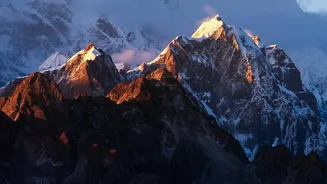
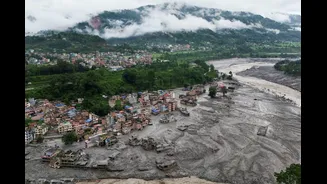
Himalayan flash floods are a different beast altogether. They are not caused by slow, accumulating rainfall but by sudden, catastrophic events in the high mountains. These floods are characterised by their incredible speed and lack of warning. Instead of a gradual rise in water levels, they manifest as a terrifying wall of water, mud, and debris that surges down steep valleys, capable of destroying everything in its path in mere minutes or hours. The primary triggers are not the monsoon rains themselves, but the dramatic and unstable geology of the world's youngest mountain range.
Core Difference: Rain vs. Ice and Rock
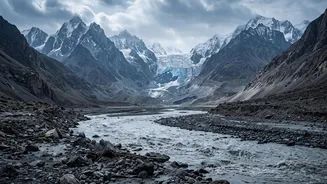
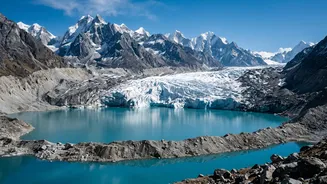
The fundamental difference lies in the trigger. Seasonal floods are meteorological; Himalayan flash floods are often geological. The latter are frequently caused by events like Glacial Lake Outburst Floods (GLOFs). As glaciers melt due to rising temperatures, they form large lakes dammed by unstable walls of ice and loose rock (moraine). When this natural dam fails—due to pressure, an avalanche, or seismic activity—it releases an enormous volume of water instantaneously. Another major cause is landslides, often triggered by extreme rainfall or earthquakes, that temporarily block a river. When this makeshift dam breaks, it unleashes a devastating flood wave downstream.
Speed and Warning: Days vs. Minutes
The contrast in warning time is stark and has life-or-death consequences. River flood forecasting systems can provide a lead time of 10 to 15 days for major rivers. Himalayan flash floods, however, can occur with terrifying speed. In some cases, water levels have been reported to rise by several metres in just 30 minutes. The events that trigger them, like a glacial lake bursting or a landslide in a remote, high-altitude area, are incredibly difficult to monitor. By the time the surge is detected, it may already be too late for communities downstream to evacuate safely. This lack of advance warning is a key reason why they are so deadly.
Destructive Power: Water vs. Debris Flow
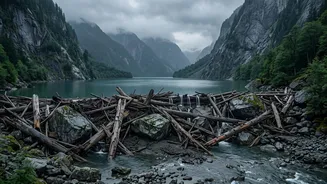
A seasonal flood carries silt. A Himalayan flash flood carries mountains. This is not an exaggeration. Because these floods are triggered by collapsing ice, rock, and moraine, they are not simply flows of water but are thick, cement-like slurries of water, mud, sediment, and massive boulders. This debris-laden flow has far greater density and destructive force than water alone, acting like a liquid bulldozer. It scours riverbanks, obliterates forests, and can smash through concrete bridges and hydropower dams—infrastructure that might withstand a typical water-only flood.
A Growing Threat in a Warming World
While seasonal floods are being influenced by changing monsoon patterns, the risk of Himalayan flash floods is being actively supercharged by climate change. Rising temperatures are accelerating glacial melt, causing the number and size of dangerous glacial lakes to increase rapidly. This destabilises the high-mountain environment, making slopes more prone to collapse and GLOF events more frequent. Understanding the unique and violent nature of these Himalayan events is the first step toward developing better, faster monitoring systems and protecting the vulnerable communities that lie in their path.